Rita Enemuru, Reporting
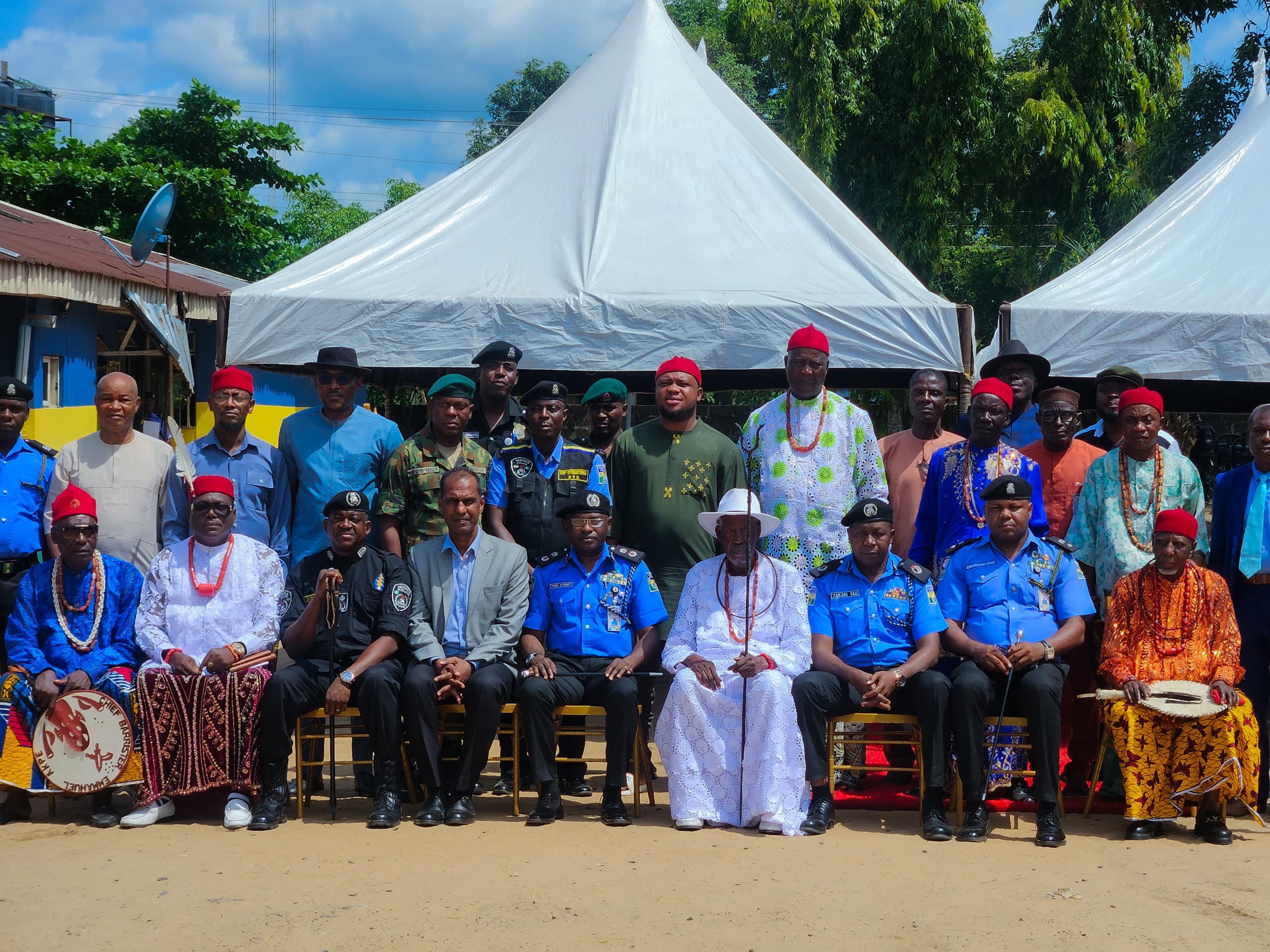
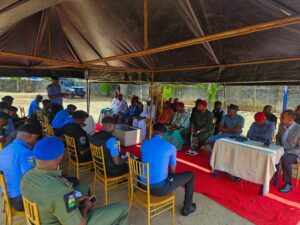
IN a crowded hall in Kwale on Wednesday, the sort of scene that has played out countless times across the Niger Delta took an unexpectedly constructive turn. There were no shouting matches. No walkouts. Just a long table, two aggrieved parties, and a police commissioner determined to keep the peace.
The threat had been real: the Umuseti Ogbe Community issued formal notice of a protest against Sterling Global Oil Exploration and Energy Production Company Limited – better known as SEEPCO. Protests in oil-bearing communities can escalate quickly. Blocked roads, occupied flow stations, and the kind of confrontation that makes headlines for all the wrong reasons.

But Delta State Commissioner of Police, CP Yemi Oyeniyi, moved first.
He convened what his office termed a “strategic stakeholders’ meeting” in Kwale, bringing together community leaders and SEEPCO representatives before any protest could materialise. The message was clear: grievances would be heard, but public order would not be compromised.
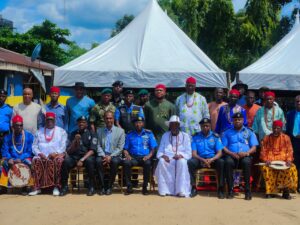
Leading the community delegation was the Okpara-Ukwu, Sunday Ebo Ogwe, represented by his prime minister, Chief Okwa Akwaligbe. High Chief Pedro Akpe spoke on behalf of the people, laying out their complaints in plain terms. On the other side of the table sat Colonel Karmveer Singh, SEEPCO’s General Manager for Community and Security, who listened and then assured those present that the company remained committed to peaceful engagement.
Oyeniyi, who arrived accompanied by his Deputy Commissioner for Operations, the Area Commander Ozoro, and the Divisional Police Officer for Ozoro, made his position unambiguous. Major Emmanuel Omo-Africa, the military officer overseeing SEEPCO’s security operations, was also present – a reminder that in the Delta, oil and armed forces are rarely far apart.
“This meeting was not convened to apportion blame,” the CP told those gathered, according to a police statement released the following day. He had come to listen, to both sides, with the singular aim of achieving lasting peace.
Then came an unusual move. After the talks concluded, the commissioner led delegates from the command, the community, and the company on an inspection tour of the Umuseti Road in Kwale. Walking the very infrastructure at the heart of some of the grievances, the party assessed conditions firsthand. It was a small gesture, but one that spoke volumes: this was not about rhetoric.
Both parties have since expressed willingness to sustain dialogue. Whether that commitment holds will be watched closely in the coming weeks.
A Week Of Diplomacy At Command Headquarters
The Kwale meeting was just one part of what proved an exceptionally busy 48 hours for CP Oyeniyi.
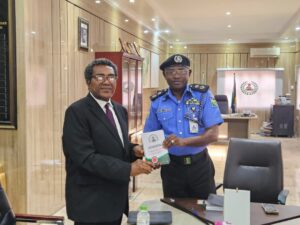
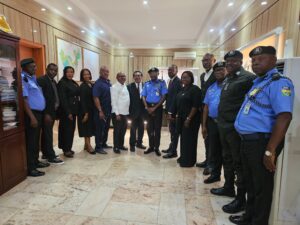
The following day, Thursday 14 May, the command headquarters in Asaba played host to a parade of visitors, each arriving with their own agenda but a shared interest in security and justice.
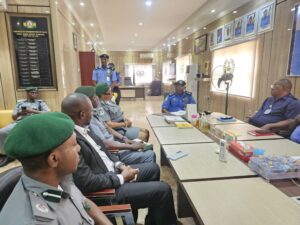
First came Sir Etekamba Udo Umoren, the Resident Electoral Commissioner for INEC in Delta State. With the electoral cycle grinding ever forward, the courtesy visit focused on election security, public safety, and the delicate business of ensuring democratic processes remain peaceful. Police and INEC have not always seen eye to eye in recent years, but here the tone was firmly collaborative.
Then it was the turn of Honourable Justice G.B. Briki-Okolosi, chairman of the Administration of Criminal Justice Monitoring Committee. His interest lay in speedier justice – better collaboration between police and the courts, swifter dispensation of cases, and the advancement of the rule of law. For a police command often accused of holding suspects beyond reasonable时限, the meeting carried pointed relevance.
Finally, Controller Judith Kanu of the Nigeria Customs Service, Edo/Delta Command, arrived for what was billed as an inter-agency synergy meeting. Her message was crisp: when security agencies align their efforts, criminal elements receive an unmistakable signal that law enforcement stands united. Oyeniyi responded in kind, describing the police-customs collaboration as “non-negotiable”.
What It Means
For a single command to broker a potentially volatile community dispute, coordinate with the electoral commission, consult on criminal justice reform, and deepen customs cooperation, all within a 48-hour window, suggests a police leadership acutely aware of the interconnected nature of security.
In the Niger Delta, community peace is pipeline peace. Pipeline peace is revenue peace. And revenue peace, as every Nigerian knows, is political peace.
Whether the Umuseti Ogbe community and SEEPCO ultimately find common ground remains to be seen. But for one afternoon in Kwale, with a police commissioner walking a disputed road alongside the very people who wanted to shut it down, the machinery of conflict prevention appeared to be working.
For now, the protest notice remains just that – a notice. And in the Delta, that counts as progress.
Follow Stonix News
Stay updated with our latest news and updates:
📢 WhatsApp Channel:
Join our WhatsApp Channel
📘 Facebook:
Follow us on Facebook
🎵 TikTok:
Follow us on TikTok
▶️ YouTube:
Subscribe to our YouTube Channel