


Rita Enemuru, Reporting
THE Chief Executive Officer and National Coordinator of the Centre for Peace and Environmental Justice (CEPEJ), Comrade Sheriff Mulade PhD, has called on Delta State Governor, Sheriff Oborevwori, to prioritise industrialisation and power generation alongside ongoing infrastructure projects, stating that job creation is critical to the sustainability of the state.
Mulade made the call on Wednesday while speaking at a press conference at the Africa for Peace Complex, CEPEJ Building, Ugolo, near Osubi Airport, during the unveiling of the organisation’s 2026 partnership work plan.
According to him, without industries, empowerment would remain unattainable, urging the state government to identify specific areas for industrial projects that would stimulate economic growth.
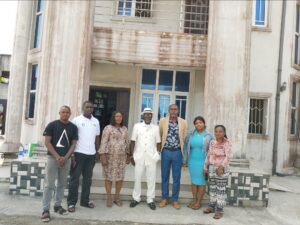
He stressed that the siting of two or three power stations across the three senatorial districts would not only create employment but also attract private investors and businesses into the state.
“While the infrastructural work is going on, the state should devise a means of industrialising some areas.
“Some industries should be built to accommodate these youths because people need to work. Infrastructure is good, but employment is more important for the sustainability of society.
“If there’s no industry, there’s no way we can talk of empowerment,” Mulade said. “Delta is currently an infrastructure site, but industrialisation is more important for us. For the economy of Delta to grow, we need electricity and power generation.
“Government is the highest employer of labour, but it cannot accommodate everybody,” he said. “There must be an enabling environment for people to thrive. We cannot call on investors to come when there is no electricity or power,” he said.
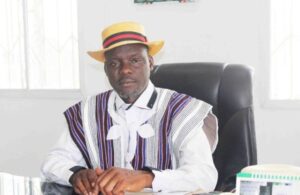
Mulade also announced that CEPEJ would roll out a Non-Violent Election Programme ahead of the 2027 general elections to promote peace and tolerance in the political space.
“This is an election year and it is key that we need peace in Nigeria, so we must sustain peace in the political arena,” he said.
He explained that the programme would focus on civic and voter education, election observation, training of election peace monitors, community stakeholder networks and multi-stakeholder roundtable discussions aimed at encouraging calm, secure and transparent electoral processes.
As part of efforts to foster unity among youths, the CEPEJ boss disclosed plans to organise a Delta State Ethnic Peace and Unity Football Tournament.
“We believe that from this football tournament, peaceful co-existence will be promoted,” he said. “It will also help us to discover talents and groom them for opportunities, including possible selection into the national team.”
Mulade further said the organisation would strengthen Petroleum Industry Act Host Community Development Trusts (PIA-HCDTs) through capacity building, leadership training, proposal development and report writing.
“The Petroleum Industry Act is one of the best things that has happened to Nigeria,” he noted. “Irrespective of the current percentage, it will better the host communities in the oil industry, and these structures must be strengthened to deliver on their mandate.”
On peacebuilding in Delta, he said CEPEJ would continue its Warri Peacebuilding Awareness Creation Programme through multi-stakeholder dialogues and town hall meetings to sustain harmony among ethnic groups in the Warri Federal Constituency.
“Warri is the commercial nerve of Delta and Warri needs peace,” Mulade said. “If there is crisis in Warri, there is crisis in Delta and it can snowball into a Niger Delta crisis, so we must do everything humanly possible to ensure peace and unity among the Itsekiris, Ijaws and Urhobos.”

He added that the organisation would rely on monitoring and evaluation, as well as what he described as the “three Cs” — communication, collaboration and cooperation — to achieve its objectives.
“We are engaging journalists to inform the public of what we are doing,” he said. “We also need to collaborate with relevant stakeholders because as a civil society organisation, we cannot achieve these plans without partnership and networking.”

The 2026 work plan, according to CEPEJ, outlines interventions in peacebuilding, environmental justice, climate action, education, sports, governance and community development across several states, including Delta, Rivers, Bayelsa, Edo, Lagos, Kano and the Federal Capital Territory.
Follow Stonix News
Stay updated with our latest news and updates:
📢 WhatsApp Channel:
Join our WhatsApp Channel
📘 Facebook:
Follow us on Facebook
🎵 TikTok:
Follow us on TikTok
▶️ YouTube:
Subscribe to our YouTube Channel


