
Ola ‘Kiya, Reporting
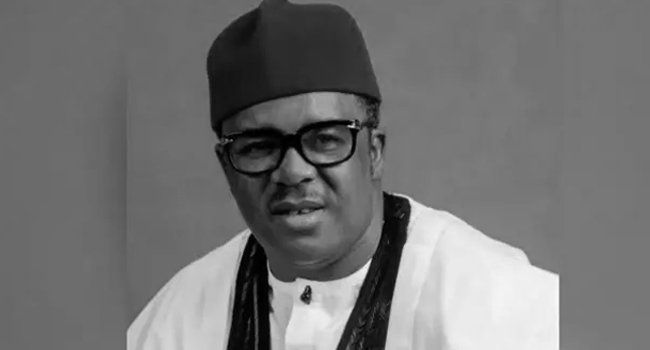
AFTER more than three decades of posthumous global acclaim, the Recording Academy has formally immortalised Nigerian music icon, Fela Anikulapo Kuti, announcing him as the first African recipient of the Grammy Lifetime Achievement Award, to be conferred at the 68th Grammy Awards ceremony in Los Angeles on February 1, 2026.
The honour, coming nearly 30 years after his death, recognises Fela not only as the undisputed architect of Afrobeat but as a global cultural force whose music, ideology and resistance reshaped African identity and political consciousness worldwide.
Friends, family members and long-time associates of the late musician, fondly called Abami Eda, have confirmed their attendance at the historic ceremony, which will mark the first time an African artiste is posthumously crowned with the Recording Academy’s highest honour.

Born Olufela Olusegun Oludoton Ransome-Kuti, the Afrobeat pioneer dropped the colonial surname “Ransome” in protest against imperial legacies, adopting Anikulapo — meaning “the one who carries death in his pouch”.
His life embodied that defiance. Arrested, beaten, censored and harassed by successive military regimes, Fela remained unyielding, using music as a weapon against corruption, oppression and social injustice.
Across a career spanning three decades until his death in 1997 at the age of 58, Fela released over 50 albums, blending West African rhythms, jazz, funk, highlife and politically charged lyricism.
Alongside legendary drummer Tony Allen, he forged Afrobeat — a genre distinct from, but foundational to, today’s global Afrobeats movement.
Speaking in a BBC interview, Fela’s son and bandleader of Egypt 80, Seun Kuti, described the Grammy recognition as long overdue.
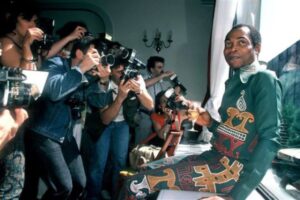
“Fela has been in the hearts of the people for such a long time. Now the Grammys have acknowledged it, and it’s a double victory. It brings balance to the Fela story,” he said.
Long-time friend and manager, Rikki Stein, echoed the sentiment, noting that the award reflects a shifting global consciousness.
“The recognition is better late than never. Fela championed the cause of people who drew life’s short straw. It would be impossible to ignore that aspect of his legacy,” Stein said.
Fela’s activism attracted the ire of Nigeria’s military rulers, most notably in 1977 after the release of Zombie, an album that mocked the blind obedience of soldiers.
His Lagos commune, Kalakuta Republic, was raided and burnt, residents were brutalised, and his mother, Funmilayo Ransome-Kuti, later died from injuries sustained during the attack. In response, Fela turned grief into protest, delivering her coffin to government offices and releasing Coffin for Head of State.
Beyond music, Fela was a cultural theorist, political agitator and pan-African ideologue, drawing inspiration from African-rooted socialism, anti-imperialism and black consciousness.
His revolutionary outlook was shaped by his mother’s activism and further sharpened by American singer and activist Sandra Izsadore.
His musical journey was also deeply influenced by Ghanaian highlife, pioneered by legends such as E.T. Mensah and Ebo Taylor, which he fused with Yoruba rhythms and jazz improvisation to create a sound that was both African and universal.

On stage, Fela was unmistakable — bare-chested, Afro-crowned, saxophone in hand, leading bands of over 20 musicians at the legendary Afrika Shrine in Lagos.
Performances were immersive, spiritual and political, blurring the line between concert and communal resistance.
“Music wasn’t entertainment to Fela,” Stein recalled. “It was his mission.”
Today, Fela’s influence remains evident in contemporary global artistes including Burna Boy, Kendrick Lamar and Idris Elba, who have all acknowledged his enduring impact. Elba has described Fela as possessing a sound as singular as icons like Sade and Frank Sinatra.
The Grammy Lifetime Achievement Award, first presented in 1963 to Bing Crosby, will also be bestowed this year on Carlos Santana, Chaka Khan and Paul Simon. Yet Fela’s recognition stands apart — as a symbolic acknowledgement of Africa’s long-overlooked contribution to global music and culture.
For Seun Kuti, the honour transcends personal legacy.
“The global human tapestry needs this,” he said. “Not just because he was my father, but because he belonged to the people.”

With this recognition, Fela Anikulapo Kuti moves from legend to officially enshrined immortality — not merely as a musician, but as a movement, an institution and an ancestor whose rhythm of resistance continues to echo across generations.