Rita Enemuru, Reporting
LEADERS of the Itsekiri ethnic nationality have called for a fresh review of the proposed delineation of wards, polling units, state constituencies and an additional federal constituency in the Warri Federal Constituency, alleging that the exercise conducted by the Independent National Electoral Commission (INEC) is riddled with legal, constitutional and technical flaws.
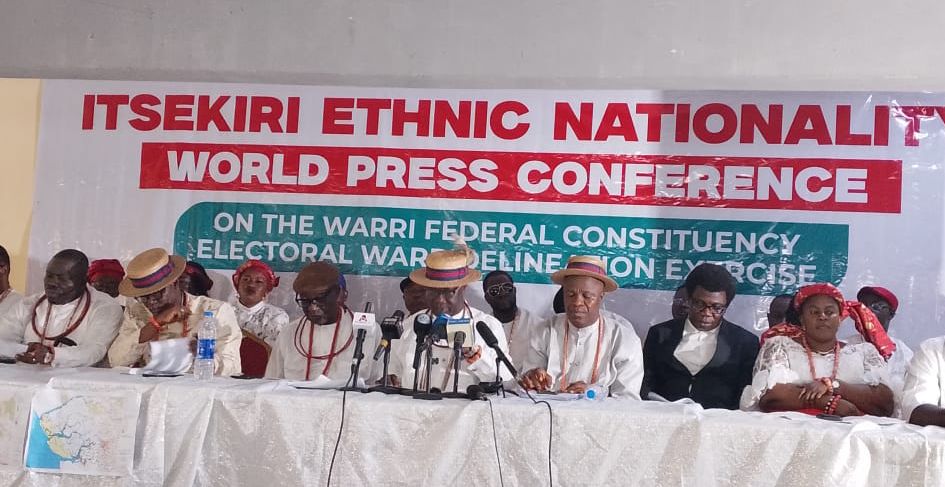
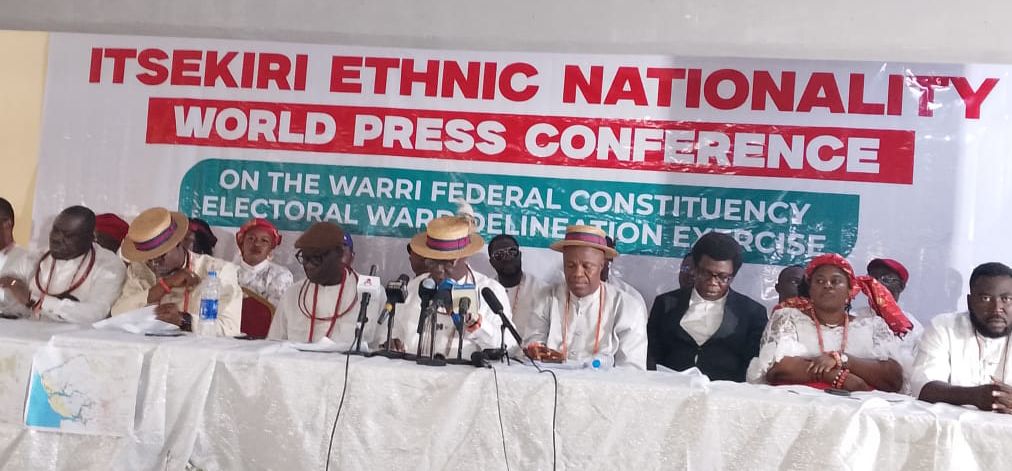
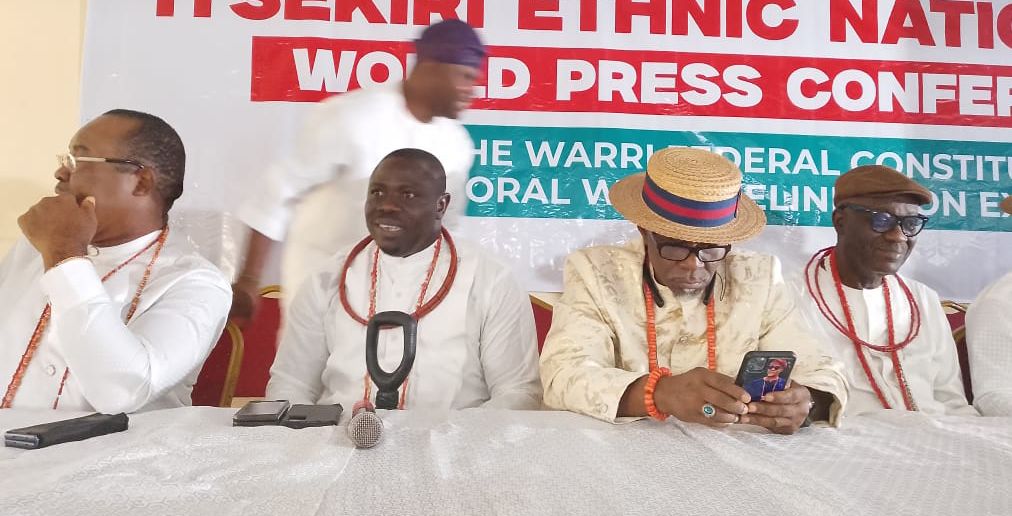
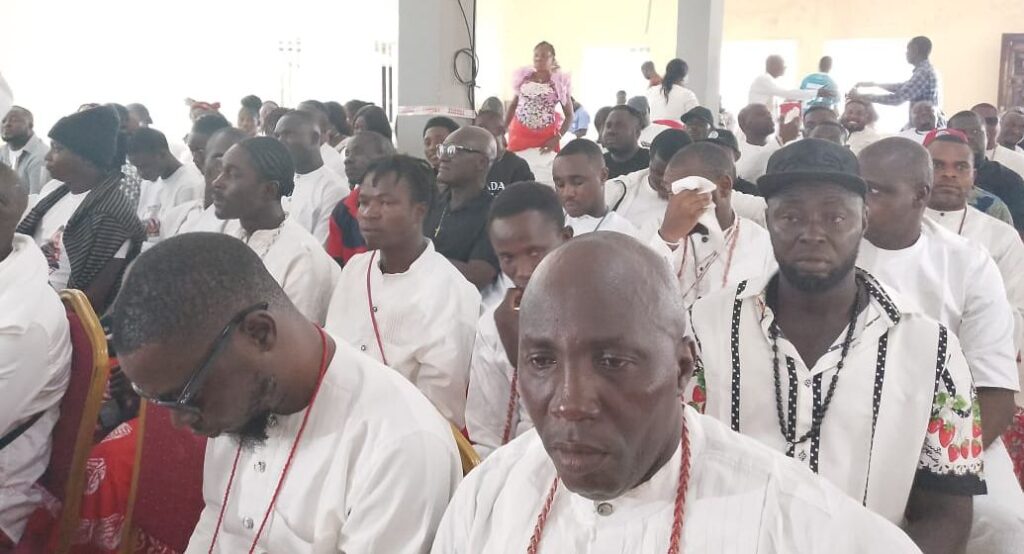
Addressing a world press conference at Ubeji Town Hall in Warri on Wednesday, the leaders rejected the delineation report unveiled by INEC on May 20, 2026, insisting that it breached provisions of the Constitution, the Electoral Act 2026 and the commission’s operational guidelines while relying on disputed fieldwork and Geographic Information System (GIS) mapping data.
The leaders stressed that although the Itsekiri people support the Supreme Court judgment directing a fresh delineation exercise in Warri South, Warri South-West and Warri North local government areas, they could not accept what they described as a defective implementation process.
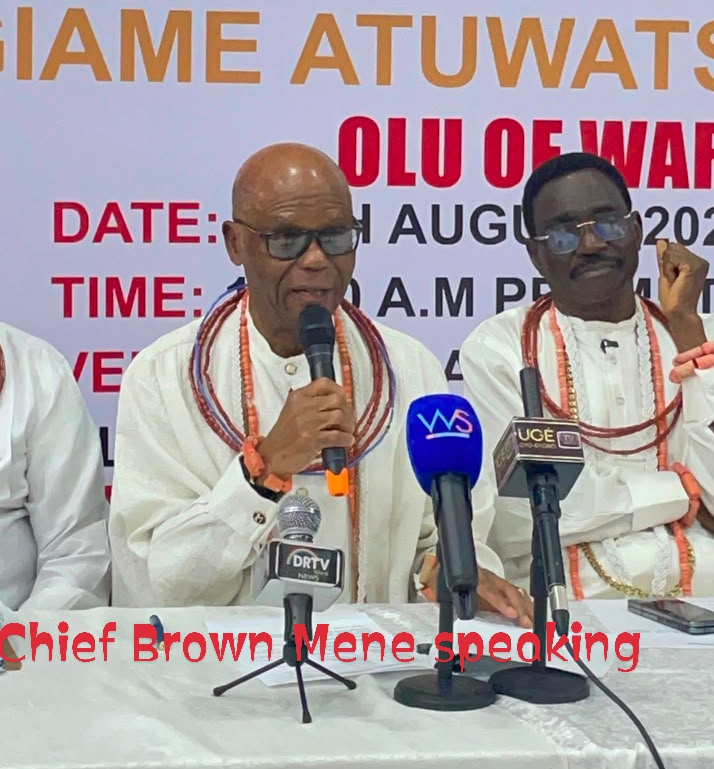
The press conference was jointly addressed and signed by Chief Edward Ekpoko, Prince Yemi Emiko, Sir A.S. Mene, Comrade Alex Eyengho and Chief Robinson Ariyo on behalf of the Itsekiri Ethnic Nationality (IEN).
They maintained that their opposition was not directed at electoral reforms or democratic inclusion but at what they alleged was INEC’s failure to comply with constitutional provisions, the Electoral Act 2026 and its own operational guidelines.
“The Itsekiri people are not opposed to lawful electoral reforms, democratic inclusion or constitutional compliance. We fully respect the judgment of the Supreme Court which directed INEC to conduct a fresh delineation exercise in Warri South, Warri South-West and Warri North LGAs.
“However, we firmly reject the proposed delineation scheme released by INEC because it violates constitutional provisions, disregards the Electoral Act, breaches INEC guidelines and relies on deeply flawed and disputed fieldwork and GIS mapping processes,” the leaders stated.
According to them, independent geographical and cartographic experts who examined the data released by the electoral commission identified several anomalies, including polling units allegedly situated outside legally recognised local government boundaries and others mapped within rivers, swamps and uninhabitable terrain.
Itsekiri leaders further alleged that some proposed wards and polling units extended beyond Delta State into neighbouring Edo and Ondo states, while others crossed local government boundaries in contravention of established electoral regulations.
They claimed that an independent technical review of Warri South-West Local Government Area uncovered 1,798 registration area polygons, a significant number of which were allegedly duplicated, submerged in water bodies or located outside the local government area.
The group also alleged that some of the disputed polygons were credited to Ijaw communities in a manner that distorted the actual demographic and electoral realities of the affected areas.
In Warri North Local Government Area, they claimed that numerous polygons were mapped outside Delta State and improperly assigned to locations beyond the council’s territorial jurisdiction.
The Itsekiri Nation equally faulted INEC’s fieldwork process, alleging that several Itsekiri communities in Warri South Local Government Area were omitted from the commission’s report despite their sizable populations.
ALSO READ: https://stonixnews.com/bayelsa-government-hands-over-new-vehicle-to-resident-doctors-association/
Among the communities listed were Ubeji, Omadino, Ifie, Egbokodo, Orugbo, Ode-Itsekiri, McDermott, Ajigba, Inorin, Ugbodede, Usele, Ajatiton and Ifie Kporo.
The leaders argued that the delineation should have been anchored on the voter register and electoral records from the 2023 general elections rather than what they described as “manufactured mapping.”
Presenting figures from the 2023 elections, they stated that Warri North had 110,392 registered voters spread across 192 polling units, while Warri South-West recorded 187,116 registered voters in 332 polling units.
They also accused INEC of creating certain proposed wards with relatively few polling units while larger communities with greater voter populations were merged into fewer wards.
As an example, they alleged that some wards proposed in the Ogbe-Ijoh area of Warri South were established with only seven polling units, whereas communities such as Orere and Ugborodo, with significantly higher numbers of polling units, were grouped into single wards.
The leaders further objected to the proposed wards of Bolou-Ama and Ewein in Warri South Local Government Area, contending that the settlements were not indigenous to the area and that some of the polling units allocated to them belonged to communities in Warri South-West.
Beyond the delineation dispute, the Itsekiri Nation condemned what it described as persistent media attacks against President Bola Tinubu and First Lady Senator Oluremi Tinubu by certain Ijaw and Urhobo groups.
They specifically accused some Ijaw groups, particularly from Gbaramatu Kingdom, of sponsoring media campaigns and inflammatory rhetoric over the delineation controversy.
While warning against threats capable of undermining peace and stability in the Niger Delta, the leaders urged all stakeholders to seek lawful and democratic avenues for resolving disagreements.
“We condemn any threats to peace, public infrastructure and regional stability. All parties must respect the rule of law and avoid inflammatory rhetoric capable of creating tension in the Niger Delta,” they said.
Despite their objections, the Itsekiri leaders expressed support for the creation of additional state constituencies in Warri North and Warri South-West as well as the proposed additional federal constituency in Warri Federal Constituency, provided the exercise is conducted in strict compliance with constitutional and legal requirements.
They called on the Federal Government to investigate the conduct of the delineation exercise and urged INEC to suspend reliance on the disputed fieldwork and GIS mapping data pending an independent technical verification.
The group also appealed to security agencies and relevant oversight bodies to closely monitor the process in order to guarantee transparency, accountability and adherence to constitutional provisions.
As part of what they described as a fair and equitable solution, the Itsekiri leaders proposed that the delineation exercise should be based on the 2023 voter register.
Under their proposal, the existing six Itsekiri wards and four Ijaw wards in both Warri North and Warri South-West would be proportionately expanded to create 12 Itsekiri wards and eight Ijaw wards in each of the two local government areas.
They insisted that their position was rooted in the principles of equity, justice, fairness and constitutional compliance, adding that the Itsekiri people would continue to pursue their interests through peaceful, democratic and lawful means.
Speaking after the presentation, Prince Emiko urged both the Federal Government and INEC to exercise caution in handling the matter, warning that the international community was closely observing developments surrounding the delineation exercise.
Also speaking, the spokesman of the Ologbotsere family, Comrade Eyengho, said his position was informed by what he described as truth, equity and fairness across the three dominant ethnic groups in the area.

“I speak from the point of truth, equity and fair play because I cut across the three ethnic groups,” he said.
Eyengho alleged that the Ijaws of Gbaramatu did not support President Tinubu during the 2023 presidential election, unlike the Itsekiri who, according to him, voted massively for the President.
“The Ijaws split their votes between Atiku Abubakar and Peter Obi. In fact, the Ijaws did all they could to cancel some results in Ugborodo to frustrate the Itsekiris support of President Tinubu. Despite all this, it’s ironic that the Ijaws, especially those of Gbaramatu are the greatest beneficiaries of this government,” he said.
He further alleged that some Ijaw groups were still involved in crude oil theft activities and maintained that the Ijaw population in Warri South remained a minority, while describing the Urhobo presence as a “micro-minority”.
In his remarks, Chief Ariyo, who’s the Egogo (mouthpiece) of Warri Kingdom, emphasised the importance of adherence to the rule of law and expressed reservations about the Supreme Court judgment that triggered the fresh delineation exercise.
“The rule of law is preferable to the rule of the lawless. The Ijaws were barred from laying any claim to Warri Urban. I have a problem with the Supreme Court judgement. You cannot decide my fate behind me. The Supreme Court judgement has only one plaintiff and that’s the Ijaws,” Ariyo said.
He urged constitutional authorities to ensure that the delineation process remains firmly within the bounds of the law. “The constitution is not something to be toyed with,” he added.
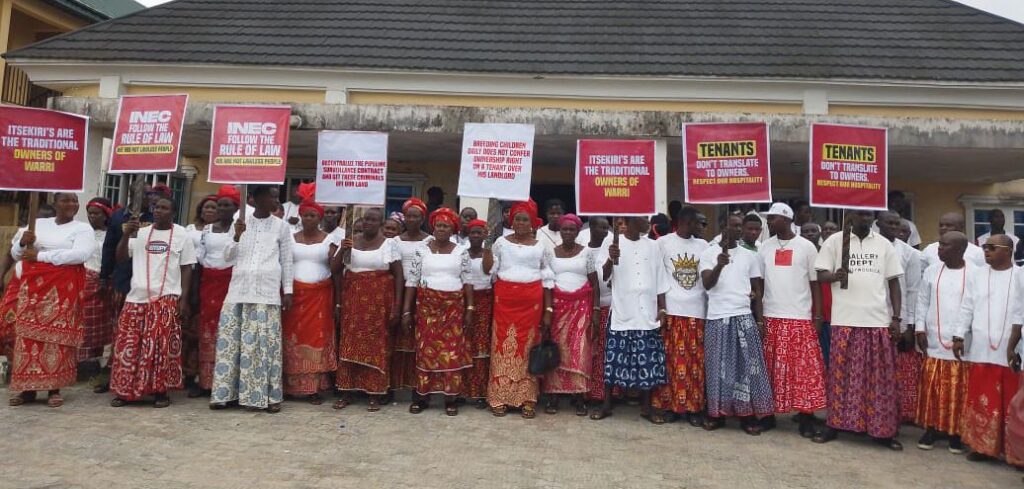
The conference had Itsekiri indigenes with protest placards with words such as: “Itsekiris are the traditional owners of Warri,”
“INEC, follow the rule of law; we are not lawless people,” among others.