
ABUJA — The Nigeria Centre for Disease Control and Prevention (NCDC) has revealed that 68 per cent of confirmed diphtheria cases involve unvaccinated individuals, with eight northern states accounting for 98 per cent of all confirmed cases nationwide.
Michael Okali, Principal Health Communication Officer in the Department of Disease Prevention and Health Promotion at the NCDC, disclosed the figures during an interview with Channels Television on Saturday.
Okali, who also serves as Head of the Risk Communication, Community Engagement and Infodemic Management Pillar of the National Diphtheria Incident Management System, said an additional 28 per cent of confirmed cases involve people who do not know their vaccination status.
“Most of the casualties were unvaccinated,” he said, emphasising that everyone remains at risk of infection.
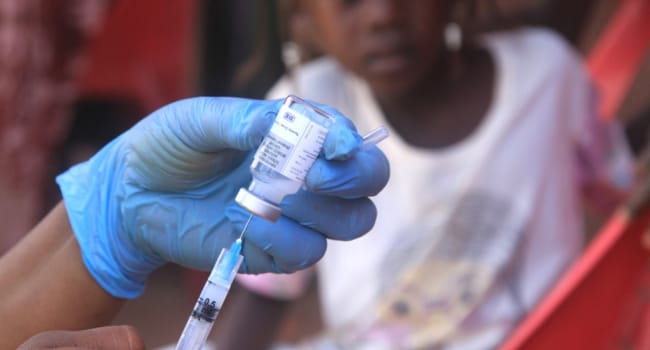
The NCDC official urged parents to ensure their eligible children and wards receive the diphtheria vaccine, which he stressed is available free of charge at all primary healthcare centres.
“That is why we advocated for full vaccination. For infancy, six, 10, and 14; then if you are not sure of it, there is a booster vaccine called the Td or the Tdap — it contains both the diphtheria, tetanus, and pertussis vaccines. This can be used to boost the immunity of the individual,” Okali explained.
Eight States Bear Brunt of Outbreak
According to Okali, eight states account for 98 per cent of confirmed diphtheria cases across Nigeria. The affected states are Kano, Kaduna, Katsina, Borno, Bauchi, Plateau, Sokoto and Zamfara.
From August 24 to August 30, 2026, Nigeria recorded 69 suspected cases, 48 confirmed cases, and four deaths, the NCDC official said.
The undervaccinated face the risk of transmitting the infection, Okali warned, adding that early reporting can help check the spread of the disease.
Understanding Diphtheria
Diphtheria is a bacterial infection caused by Corynebacterium, which produces a toxin affecting the nose, throat, tonsils and larynx, as well as major organs including the heart, nerves and kidneys.
The infection can lead to the appearance of a grey-whitish pseudomembrane at the back of the throat or nose.
The bacteria spread from person to person, usually through respiratory droplets from coughing or sneezing. People can also become infected from touching open sores or ulcers, or through contaminated clothing and objects.
Symptoms include mild fever, sore throat, swollen glands around the neck and difficulty breathing.
Health authorities continue to emphasise the importance of vaccination as the most effective protection against the disease, which remains a significant public health challenge in parts of Nigeria where immunisation coverage has been inadequate.