Ebenezer Adurokiya, Reporting
THE Petroleum Training Institute (PTI) in Effurun, Delta State, has reaffirmed its readiness to partner with Ghana’s National Petroleum Authority (NPA) in building technical capacity for the West African nation’s oil and gas industry, describing the collaboration as vital to strengthening regional solidarity and advancing Africa’s petroleum sector.
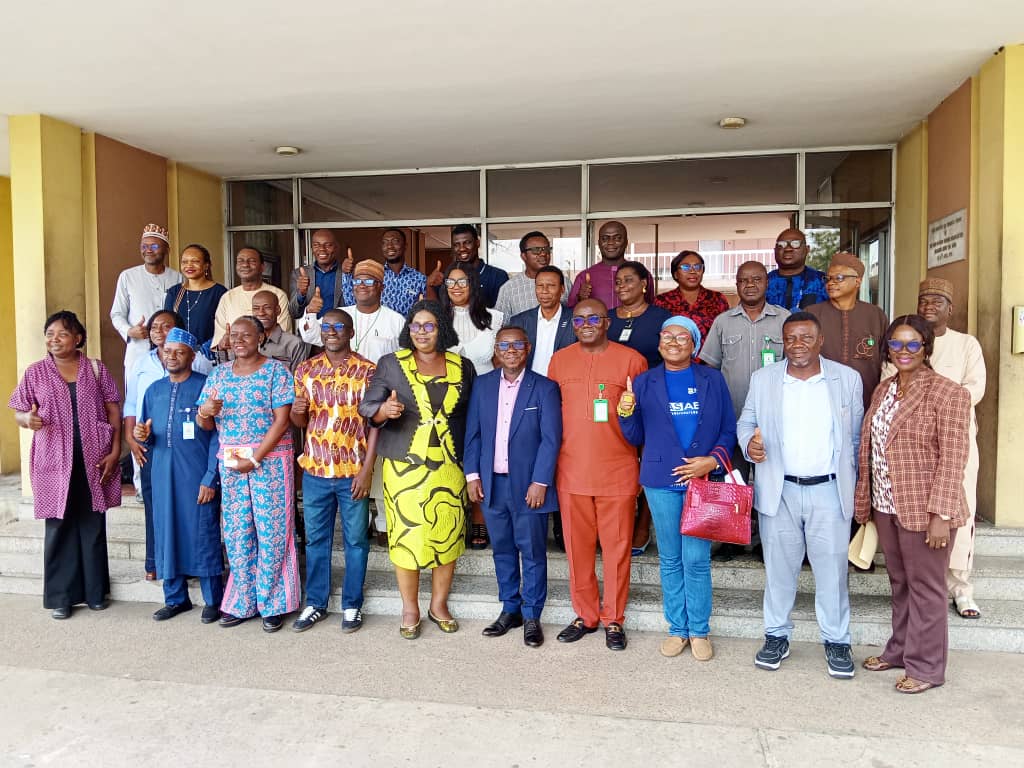
The pledge came as a high-level Ghanaian delegation visited the institute on Tuesday to explore a strategic partnership aimed at bolstering technical expertise in Ghana’s hydrocarbon sector.
Speaking on behalf of the Principal and Chief Executive of PTI, Engr. Dr. Samuel E. Onoji, the institute’s Director of Research and Development, Dr. Tina Isichei, said the visit had come at a critical juncture for Africa’s petroleum industry.
She noted that PTI, established in 1972, was founded to develop the technical manpower that supported Nigeria’s emergence as a major player in the Organisation of Petroleum Exporting Countries (OPEC) and the global oil industry.
According to Dr. Isichei, the institute has trained more than 50,000 professionals who are making significant contributions to the oil and gas sector in Nigeria and further afield.
She assured the Ghanaian authority of PTI’s willingness to build a mutually beneficial relationship, stressing that the institute had acquired extensive expertise over its 54-year history.
“PTI is ready and glad to be of help to the Ghana National Petroleum Authority in every conceivable way, having gathered the expertise over the 54 years of the institute’s existence,” she said.
Dr. Isichei attributed PTI’s sustained reputation to four major pillars — expertise, experience, exclusivity and effectiveness — adding that the institute places strong emphasis on practical, hands-on training.
She explained that PTI’s curriculum is accredited by the National Board for Technical Education (NBTE) and supported by modern training facilities and experienced instructors.
She listed the institute’s areas of strength as including welding and fabrication, drilling and well control, National Skills Qualification (NSQ) certification, its Skills Development Academy, firefighting, underwater welding and research clusters.
Dr. Isichei also invited the Ghanaian delegation to participate in PTI’s Annual International Conference on Hydrocarbon Science and Technology, which has been promoting manpower development since 2023, and promised them a guided tour of the institute’s facilities.
The delegation had arrived at PTI’s Council Chambers earlier on Tuesday as part of Ghana’s efforts to establish its own petroleum training centre of excellence by leveraging Nigeria’s more than five decades of experience in hydrocarbon manpower development.
Responding, the leader of the Ghanaian delegation and Director of Research at the NPA, Dr. Joseph Wilson, expressed appreciation for the warm reception and described the engagement as highly enlightening.
Dr. Wilson said Ghana had deliberately chosen Nigeria as its senior partner in its capacity development drive because of the longstanding relationship between both countries and the need to deepen cooperation among African nations.
“We are here basically to deepen capacity. For reasons having to do with regional solidarity, Ghana decided to choose Nigeria as a senior partner instead of looking outside the continental shelf of Africa,” he said.
He added: “Nigeria, being our big brother, became our desired destination for us to seek technical assistance to set up our own centre of excellence.”
He disclosed that the proposed collaboration would cover legal frameworks, technical assistance, stakeholder engagement, consultancy services, human capital development and broader capacity-building initiatives.
A major attraction during the visit was the inspection of PTI’s specialised training facilities. At the rig operations facility, the Director of Rig Operations, Engr. Lawrence Uti, explained drilling principles and rig operations, while the Director of the Flow Station, Engr. Austin Ogugu, demonstrated operational processes from the wellhead and manifold through separators to crude oil, gas and water chambers.
Other members of the Ghanaian delegation included Bridgette Obiri-Yeboah, Director at the NPA; Mohammed Issah, Director of Policy at COMAC; Eunice Budu Nyarko, Director of Commercial Services; Sedinam Mammara, Director of Human Resources; Mudasiru Malana, Technical Aide; Saed Ubeidaleh, Head of Quality Control; Godwin Yan Konu, Director of Business Development; and George Sasu Afful, who oversees Talent Development.
The visit underscores the growing partnership between Nigeria and Ghana in developing the skilled workforce required to drive sustainable growth and technological advancement across Africa’s petroleum industry.