Ebenezer Adurokiya, Reporting
AS Nigeria marks 27 years of uninterrupted democratic rule in the Fourth Republic, political leaders, lawyers, activists and public affairs commentators have expressed divergent views over the nation’s democratic journey, with many insisting that ordinary Nigerians are yet to enjoy the true dividends of democracy.
The stakeholders, who spoke in separate interviews with Stonix News, acknowledged that civil rule since 1999 has provided stability compared to years of military dictatorship, but argued that corruption, weak institutions, injustice, poor leadership and economic hardship continue to undermine democratic governance.
A Public Affairs Analyst and Secretary of the PDP in Delta State, Alaowei Cleric.E. Esq., said democratic rule, despite its shortcomings, remains preferable to military governance.
“Nigeria under civil rule since 1999 has fared better than the military era. The periods of military rule stagnated our development and we are still recuperating from the damage done by successive military juntas,” he said.
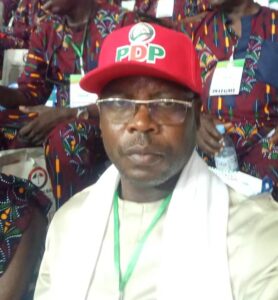
According to him, military administrations introduced “obnoxious and draconian laws” which continue to affect national unity and development.
“The military rules created loopholes for corruption to thrive in the country. Though our democratic sojourn has not been perfect in the last 27 years, it has corrected some of the mistakes of the military era,” he added.
On whether Nigerians are enjoying democratic dividends, Cleric said the answer was largely negative.
“The citizens are not enjoying any dividends of democracy. We are getting worse in terms of governance going by the report cards of successive governments since 1999. Development appears stagnated and we are moving backwards instead of growing,” he stated.
He, however, commended the administrations of former Presidents Olusegun Obasanjo and Goodluck Jonathan, saying they placed Nigeria “on the developmental lane” during their tenures.
The PDP chieftain accused successive governments of prioritising re-election and political dominance over governance.
“It has now appeared that governments focus more on re-election bids and imposition of successors rather than governance. They are ready to kill opposition parties just to foist a one-party system in the country,” he alleged.
He warned that democracy would remain endangered in the absence of healthy political competition.
“Our democratic practice would have been deepened if the government of the day allowed opposition parties to function side by side with the ruling party,” he said.
Cleric further blamed Nigeria’s democratic failures on desperation for power and corruption in public office.
“In advanced democracies, government is seen as selfless service to the people, but in Nigeria, public office is viewed as an avenue to amass wealth. People become desperate to occupy office because of the unaccounted gains associated with governance,” he said.
He criticised interventionist agencies, describing many of them as conduits for corruption.
“Institutions like the NDDC are no longer development agencies but mediums to make quick money. Inflated contracts with kickbacks are now the order of the day,” he alleged.
Ahead of the 2027 general elections, Cleric urged Nigerians to vote based on competence and national interest.
“The electorate should vote for competence. Nigerians must gird themselves with their Permanent Voter Cards and elect leaders who truly have the country at heart,” he said.
He also called on the Independent National Electoral Commission (INEC) to remain impartial.
“The ruling government should refrain from interfering with the functions of the electoral body so that the will of the electorate can prevail,” he added.
Also speaking, the National Publicity Secretary of the Pan Niger Delta Forum (PANDEF), Chief Obiuwevbi Ominimini, described Nigeria’s 1999 Constitution as “faulty” and “imposed”.
“The Nigerian democracy is guided by the constitution and the 1999 Constitution is very faulty. It was not drafted by the Nigerian parliament nor approved through referendum. It was imposed on Nigerians,” he argued.
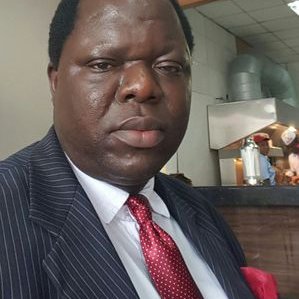
Ominimini maintained that injustice against the Niger Delta region remains one of the greatest obstacles to national development.
“The Niger Delta surrenders its oil and gas for the betterment of the country, yet the people continue to suffer injustice. Oil blocks are owned by people outside the region while the environmental consequences remain with us,” he lamented.
He decried continued gas flaring in oil-producing communities.
“The government collects gas flare penalties from international oil companies, yet the proceeds are not used to develop the Niger Delta communities suffering the effects of environmental degradation,” he said.
The PANDEF spokesman further criticised what he described as neglect of key infrastructure in the region.
“We have the Sapele, Warri, Port Harcourt and Calabar ports, but they have been abandoned for years while port activities are concentrated in Lagos. That is not fair,” he stated.
He also faulted the deplorable condition of the East-West Road.
“It is unexplainable that the region generating huge revenues for Nigeria remains abandoned,” he added.
According to him, true federalism remains the only lasting solution to Nigeria’s challenges.
“The only solution to Nigeria’s problems is federalism where every region controls its resources and pays tax to the centre. The military distorted that arrangement and since then the country has been upside down,” he argued.
He further advocated state policing and constitutional restructuring.
“The exclusive legislative list is too wide. More powers should be devolved to the states and state police should be established to tackle insecurity,” he said.
On his part, Delta-based politician, environmentalist and national commentator, Chief Sunny Onuesoke, acknowledged that Nigeria’s democracy had recorded some gains over the years.
“Nigeria’s democracy has recorded gains in infrastructure, civic participation and democratic stability over the past 27 years,” he said.
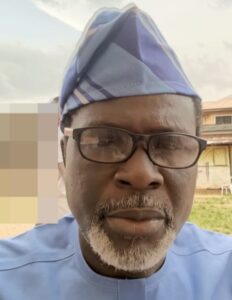
However, he noted that economic hardship continues to affect millions of Nigerians.
“Many Nigerians are still struggling with poverty, unemployment, insecurity and high living costs.
According to the World Bank, about 63 per cent of Nigerians were living below the poverty line in 2025,” he stated.
Onuesoke blamed weak institutions, policy inconsistency and corruption for the nation’s democratic shortcomings.
“Nigeria failed to sufficiently invest in agriculture, industrialisation, education and job creation despite its enormous human and natural resources,” he said.
He called on governments at all levels to focus on food security, youth empowerment, infrastructure, education and healthcare.
“The government must support small businesses, expand social protection and tackle food inflation to improve citizens’ welfare,” he added.
Ahead of the 2027 elections, Onuesoke urged Nigerians to reject ethnic and religious sentiments.
“Nigerians must vote based on competence, integrity, vision and performance, not ethnicity, religion or financial inducement,” he advised.
Similarly, former Chairman of the Nigerian Bar Association (NBA), Warri Branch, Chief Emmanuel Uti, said Nigerians were enduring hardship because of poor leadership.
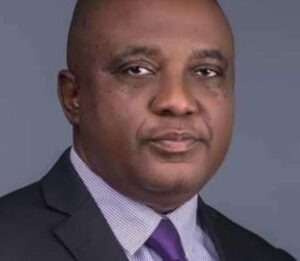
“On whether Nigerians are enjoying the dividends of democracy, my answer is no. We are passing through hardship occasioned by poor leadership by the political class since 1999,” he said.
Uti argued that Nigeria failed by “grooming strong men instead of strong institutions”.
He urged governments to prioritise productivity and agriculture.
“The government should focus more on productivity and agriculture, not the sharing of rice and money,” he stated.
He also charged voters to elect “persons with track records of service and honour”.
Barrister Oghenejabor Ikimi, a human rights lawyer and defender of the underprivileged, insisted that Nigeria was yet to practice genuine democracy.
“The citizens are not enjoying the dividends of democracy because we are not practicing democracy,” he declared.
According to him, democracy should guarantee political freedom, public accountability, reduced abuse of power, observance of the rule of law and protection of human rights.
“All these indices are totally absent under the present political dispensation,” he alleged.
Ikimi argued that handouts and empowerment items should not be mistaken for democratic dividends.
“The distribution of motorcycles and similar items are not dividends of democracy. They are attempts by political leaders to spread poverty,” he said.
He traced Nigeria’s problems to regional politics and nepotism dating back to independence.
“The winner at the centre practiced the politics of ‘winner takes all’, and that mentality has persisted,” he said.
The lawyer called for greater accountability, transparency and adherence to court orders.
“Government at all levels must obey court orders, reduce abuse of power and fully protect human rights nationwide,” he stressed.
He further criticised what he termed the sidelining of voters by the political elite.
“Sovereignty belongs to the people, but presently the votes of the electorate no longer count. The political class uses weak institutions to overthrow the will of the people through what I call a civil coup,” he alleged.
Despite differing perspectives, the respondents were unanimous in calling for stronger institutions, accountable leadership, electoral reforms and policies that directly improve the lives of Nigerians as the country prepares for another democratic transition in 2027.