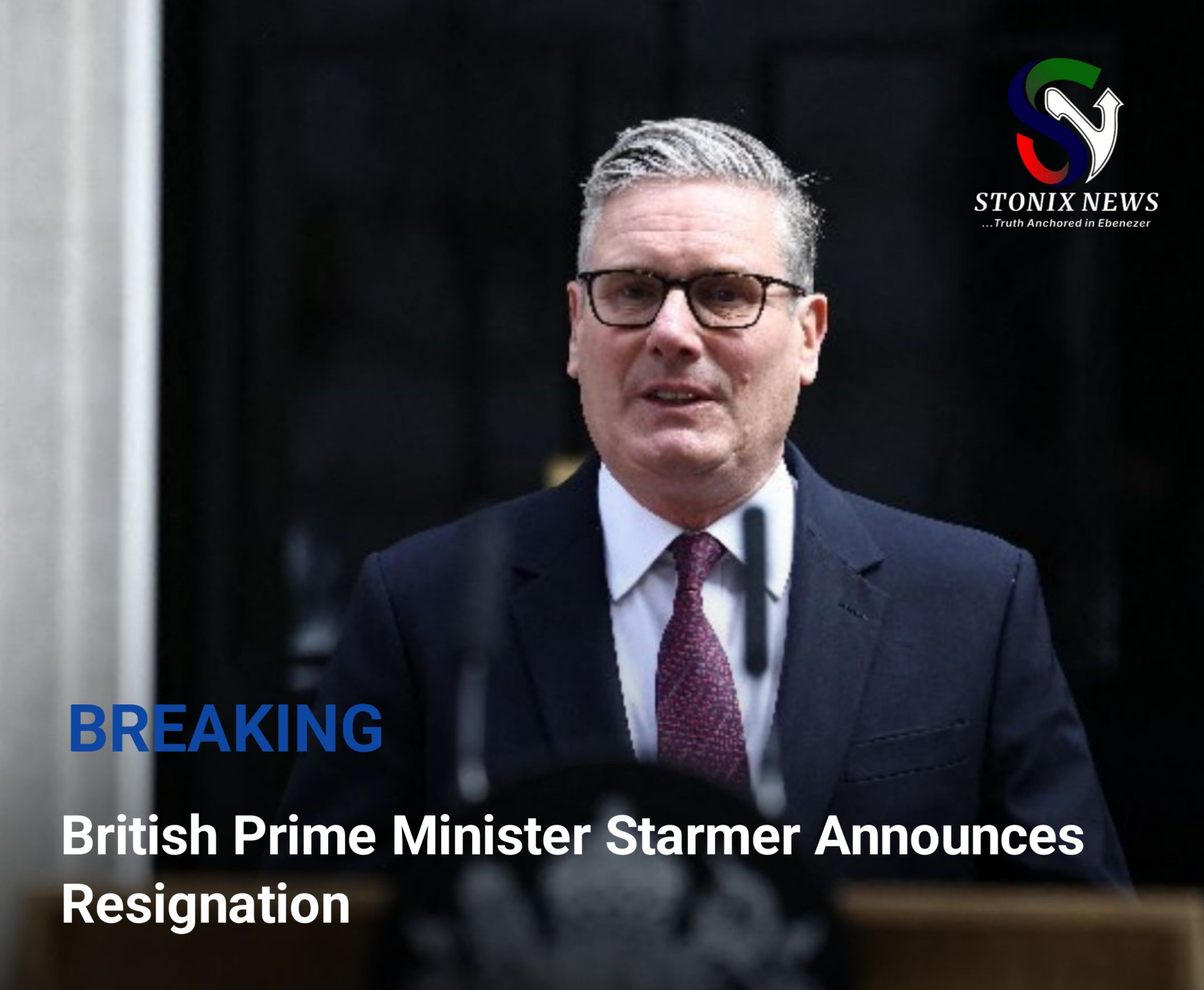
BRITISH Prime Minister Sir Keir Starmer has announced his resignation as leader of the Labour Party and confirmed that he will step down as prime minister once a successor is elected, bringing an end to a turbulent period in office marked by policy reversals and declining public support.
Starmer made the announcement on Monday in an emotional address outside 10 Downing Street, where he reflected on his time in office and defended the decisions he had taken during his premiership.
Fighting back tears, the prime minister said: “Every decision I have taken has been about putting the country I love first. That is why I will resign as leader of the Labour Party.”
He revealed that the process of electing a new Labour leader would begin in July, with the successful candidate expected to be in place by September. Until then, Starmer said he would remain in Downing Street to ensure an orderly transition of power.
The resignation comes less than two years after Starmer led Labour back to government, ending more than a decade of Conservative rule. However, his administration struggled to maintain public confidence amid a series of policy U-turns and mounting criticism over its handling of key domestic issues.
Political analysts say the announcement opens a new chapter for both Labour and the United Kingdom, with the governing party now facing a leadership contest at a crucial time for the country.
Starmer’s departure will also add to an unprecedented period of political instability in Britain. Once his successor takes office, the country will have had seven prime ministers in just ten years, a level of leadership turnover unmatched in modern British political history.
Attention is now expected to turn to potential contenders for the Labour leadership, as party members and lawmakers prepare for what could be a fiercely contested race to determine Britain’s next prime minister.
The transition is expected to dominate the political landscape over the coming months, with the new leader inheriting the challenge of restoring public trust and steering the government through a period of economic and political uncertainty.