Rita Enemuru, Reporting
OIL and gas industry experts have called on Nigeria to urgently shift from certificate-driven training to practical competence, continuous retraining and digital skills development to prepare its workforce for the changing energy landscape and maximise opportunities in the sector.
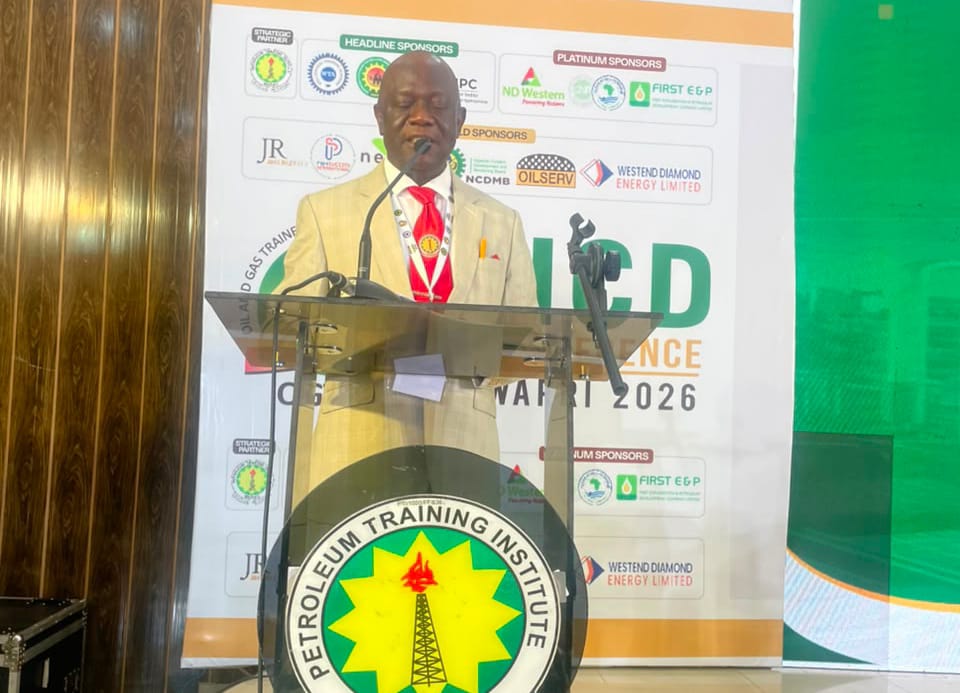
The experts made the call at a plenary session on human capital development, at the 2026 OGTAN Human Capacity Development Conference held on Thursday.
The experts identified gaps in practical skills, industrial exposure, digital competence and commercial understanding as major challenges that could undermine Nigeria’s ability to participate effectively in the evolving energy industry.

Speaking as a panelist, the Executive Secretary of the Nigerian Content Development and Monitoring Board (NCDMB), represented by the Director, Capacity Building, Mr Abayomi Bamidele, said the industry’s emphasis on certificates was one of the concerns affecting effective skills development.
He said the experience of the board showed that many trainees were more interested in obtaining certificates than acquiring the competence required to perform effectively in the industry.
In his words, the Managing Director of ND Western Limited, Olarewaju Kalejaiye, said human capacity development remained a major determinant of industry performance, noting that the Nigerian Content Act had contributed significantly to improving capacity development in the sector.
Kalejaiye said the changing industry was creating significant opportunities but required deliberate efforts to develop middle-management talent and strengthen cooperation between operators and regulators.
He called for practical measures to identify skills gaps and develop strategies to address them.
The Commission Chief Executive of the Nigerian Upstream Petroleum Regulatory Commission (NUPRC), Oritsemeyinwa Eyesan, said digitalisation was already reshaping the industry and Nigeria must build the capacity needed to participate effectively in the emerging environment.

She said workers must possess commercial understanding and the ability to anticipate industry requirements, while continuous competency development and critical intervention programmes remained necessary.
Eyesan also identified data as a critical component of the industry’s future, particularly the ability to protect confidential information while deploying data effectively.
The Chief Executive Officer of Richardson Oil and Gas, Akin Osuntoki, said competence should be determined by performance rather than the possession of certificates.
“Competence is defined by the ability to do the job not by the certificate,” he said.
Osuntoki said the rapid evolution of skills requirements meant Nigeria must prepare professionals for digital oil fields, cybersecurity and complex project management.
He also advocated a return to apprenticeship as a deliberate policy and urged stakeholders to train Nigerians for opportunities across Africa and the wider global industry.
Representing the Chairman of the Petroleum Technology Association of Nigeria, Joan Faluyi said Nigeria continued to face a gap between certification and demonstrated competence.
Faluyi said the country’s challenge was not a lack of innovation or talent, but the need to train people who could develop their abilities and apply them effectively.
The Managing Director of Laser Engineering said Nigerian graduates were intelligent and capable of competing globally but needed greater exposure to leadership, digital skills and financial management.
He said his company employed more than 120 graduates and stressed the importance of ensuring that graduates left tertiary institutions better prepared for the workplace.
He also described industrial training as indispensable to the development of his company.
“If you remove industrial training from my life, I will not have a business,” he said.
At a separate panel session on “Nigeria’s Energy Mix & HCD Readiness: Gas, Decarbonisation and New Energies — Are We Training for the Right Energy Mix?” experts further stressed the need to align human capital development with the transformation of Nigeria’s energy sector.
The Special Assistant, Training and Capacity Development, Presidential Initiative on Compressed Natural Gas and Electric Vehicles, Omoh Imoukhude, said the expansion of the compressed natural gas conversation required attention to quality assessment and management.

Imoukhude said stakeholders must ensure that CNG was available, accessible and affordable while maintaining international quality standards.
He said the country’s growing gas sector could transform lives if supported by adequate supply, competency and financing.
“Who is going to look towards quality assessment management? We are to ensure that CNG is available, accessible and affordable,” he said.
“The gas conversation has exploded in this country and we can’t run away from it. We know that we can transform lives with proper gas supply, competency and financing.”
Also speaking, the Executive Director, Asset Management, NNPC Gas Infrastructure Company, Tunde Gbadamosi, said the skills required in the energy sector were changing as the industry became increasingly data-driven.
Gbadamosi said some skills that were relevant when Nigeria’s oil industry was developing had become obsolete, making it necessary for professionals to embrace data analytics and develop stronger commercial awareness.
He said graduates entering the industry must understand commercialisation and be prepared to continuously learn and unlearn as the sector evolves.
“Years back, we realised we have the crude oil but the skill we had that time is becoming obsolete.
The energy sector is becoming more important. The system is more data-driven and we have to embrace the data in terms of analytic,” he said.
Gbadamosi added that commercial understanding would increasingly determine the ability of professionals to make sound decisions in the industry.
The Managing Director of Oilserv Limited, Dr Kenechukwu Nwangwu, said the energy industry was transforming faster than the talent pipeline, creating an urgent need for Nigeria’s education and training systems to catch up with industry requirements.
Nwangwu, who said his experience in the oil industry began in 1998 as part of the first set of graduates to enter the Shell programme, said the training received at the time was designed to produce well-rounded professionals with an understanding of the energy sector from end to end.
He said although the education system developed discipline among graduates, the rapid changes in the industry required a stronger alignment between education and emerging technical demands.
“The industry is changing and we need to catch up with the changes. We need to transition from the traditional maintenance to digital maintenance. How do you predict failure and stop it from happening?” Nwangwu asked.
The discussions placed human capital development at the centre of Nigeria’s efforts to respond to changes in the oil and gas industry, with experts emphasising that the country’s ability to benefit from its energy resources would increasingly depend on the competence, adaptability and practical experience of its workforce.
The stakeholders consequently called for stronger industry collaboration, continuous retraining, industrial exposure, apprenticeship programmes and greater emphasis on digital, commercial and practical skills as Nigeria prepares its workforce for a more data-driven and evolving energy sector.