By Alex Vines
AS BRICS expands, Africa has a larger presence around the table than ever before. South Africa is now joined by Egypt and Ethiopia as full members, while Nigeria and Uganda participate as partner countries.
The symbolism is obvious and we now wait to see whether a larger BRICS can translate this expansion into greater African influence and practical gains, or whether it risks becoming a bigger but less coherent diplomatic platform.
African governments are not engaging with BRICS because they want to exchange a Western-led international order for a Chinese- or Russian-led one. Most have little interest in choosing sides. What they want is greater room for manoeuvre. What we are seeing instead is a form of forum shopping.
African governments are increasingly comfortable operating within multi-alignment, simultaneously through the African Union, United Nations, G20, BRICS, Commonwealth, Francophonie and other groupings. Different organisations offer different things: political access, development finance, security partnerships, trade opportunities, diplomatic visibility or simply another platform from which to advance national interests.
This trend goes well beyond BRICS. Togo and Gabon joined the Commonwealth in 2022 despite neither having a British colonial history. Other governments continue to show interest in membership. Ghana joined the Francophonie recently and it has also expanded its reach and attraction. These organisations are not disappearing. If anything, there is a queue of countries seeking access to more diplomatic clubs, not fewer. This is not ideological realignment. It is pragmatic diversification – as one African leader told me, ‘I always prefer a buffet and having choice rather than having a set choice menu in my diplomacy.’
BRICS fits neatly into this approach. China, India, the Gulf states, Europe and the United States can all be useful partners, but for different purposes. African governments increasingly see little contradiction in maintaining relationships with all of them.
India itself has shown why this matters. During its 2023 G20 presidency, New Delhi played an important role in securing the African Union’s admission as a permanent member of the G20. That was a tangible institutional gain for Africa, not simply another declaration about the “Global South.” That should be one benchmark against which BRICS is judged.
The difficulty is that representation is not the same as influence. South Africa, Egypt and Ethiopia do not have identical foreign-policy priorities. Nigeria and Uganda bring their own interests as partner countries. Nor is there yet an obvious mechanism through which African BRICS members coordinate their positions. Expansion also creates a second problem: consensus.
The original BRICS was never especially homogeneous, but the enlarged grouping brings together states with increasingly divergent strategic interests. India and China cooperate but also compete. Iran and Gulf states bring their own regional priorities. Russia tends to see BRICS in more explicitly geopolitical terms, while India and several others remain wary of turning it into an anti-Western alliance.
Will this expanded BRICS still be able to reach consensus on a meaningful final communiqué? Consensus has always been central to how BRICS operates. But every additional member adds another set of interests and another potential veto point. If agreement can only be reached by making final declarations increasingly broad and uncontroversial, BRICS may become stronger numerically while weaker politically.
For African governments, however, the real measure of BRICS will not be the strength of its communiqué. It should be delivery. The New Development Bank remains the clearest example of what BRICS can achieve when it creates institutions rather than slogans. It is still modest compared with the World Bank and other established lenders, but it provides another source of capital and an additional degree of competition in development finance.
Africa needs more of this. The continent requires investment in electricity grids, transport corridors, ports, digital infrastructure and industrial capacity. It needs cheaper capital and financing structures better adapted to African economies. If BRICS can contribute to that – and support African value addition rather than another generation of extractive commodity corridors – then expansion begins to acquire practical meaning.
Africa is becoming increasingly important to global supply chains for cobalt, copper, lithium, manganese, graphite and other minerals. Yet the familiar danger remains of minerals leaving African ports while processing, manufacturing and most of the value creation take place elsewhere.
BRICS now brings together China, the dominant actor in many mineral-processing supply chains; India, another major industrial economy; Gulf capital; and several important African producer states. In theory, that combination should create opportunities for more refining, processing and manufacturing on the African continent. Whether it does so will tell us rather more about the value of BRICS to Africa than another debate over de-dollarisation.
African members also need to do more themselves. They do not need a rigid African caucus inside BRICS, but greater coordination around a small number of shared priorities would make sense: development finance, debt, reform of global financial institutions, industrialisation and greater African representation in international decision-making. The African Union should be part of that discussion.
Otherwise, expansion risks giving Africa more voices without necessarily giving it more influence. Europe should also be careful not to misread what is happening. Dismissing BRICS as anti-Western theatre, or simply as a Chinese vehicle, misses much of its attraction.
African governments are forum shopping because the international system now gives them more opportunity to do so. They want more partners, more capital and more political choice.
BRICS does not need to replace the G20, Commonwealth, Francophonie, World Bank or United Nations to be useful. For African governments, its attraction lies precisely in being one more table at which they can sit. For an expanded BRICS does adding new members weaken or strengthen it?
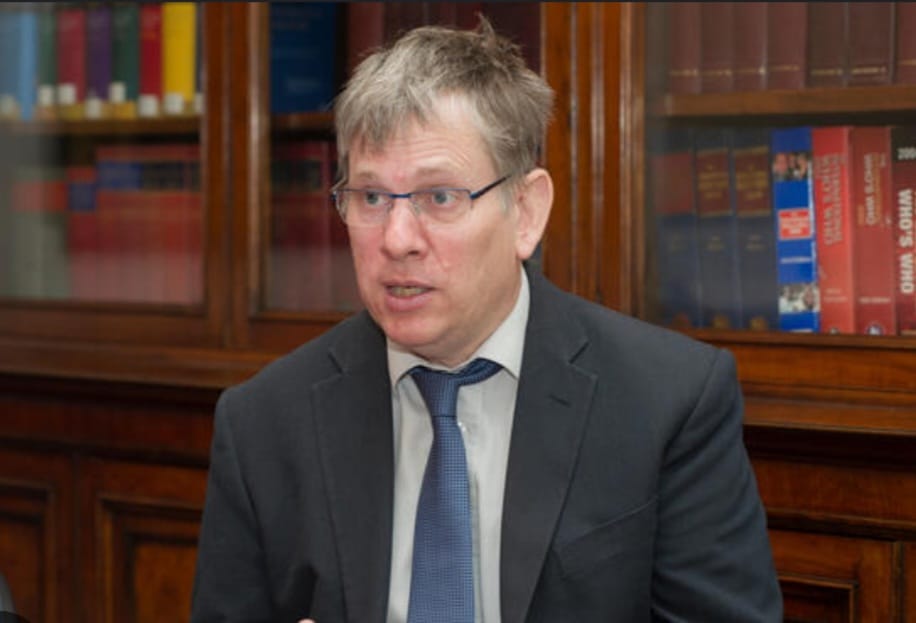
Dr Alex Vines is Senior Visiting Fellow, African Leadership Centre, King’s College London, and Africa Director at the European Council on Foreign Relations