
Sharon Adurokiya, Reporting
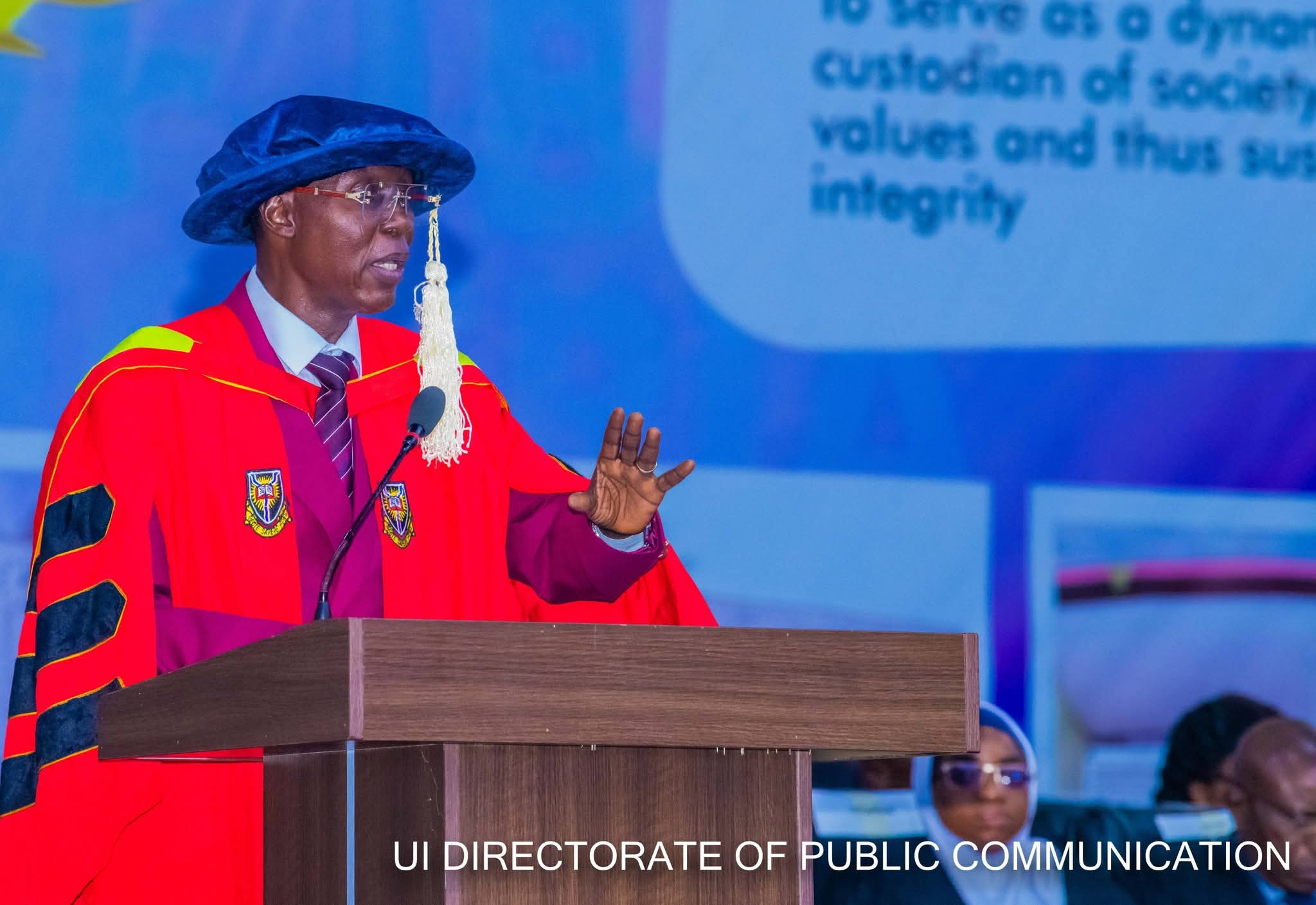
A Professor of Social Psychology at the University of Ibadan, Professor Adegbenga Sunmola, has called for stronger and more comprehensive interventions to address intimate partner violence (IPV) in Nigeria.
He made the call while delivering the 625th Inaugural Lecture of the University of Ibadan on behalf of the Faculty of the Social Sciences. The lecture was entitled “Intimate Partner Violence in Nigeria: Beyond Tolerance and Beyond Silence”.
Professor Sunmola described IPV as both a public health emergency and a violation of women’s fundamental rights, disclosing that it occurs in physical, sexual, emotional or psychological forms.
He explained that physical violence includes acts such as hitting, slapping, kicking and choking, while sexual violence involves sexual acts carried out without consent. He noted that emotional and psychological abuse include insults, humiliation, intimidation, threats, constant criticism and behaviours that undermine a woman’s self-worth and autonomy.
The Inaugural Lecturer warned that the normalisation of violence within relationships could perpetuate cycles of abuse across generations, stressing that cultural, religious or social considerations should not be used to justify violence against women.
He disclosed that 23.4 per cent of women reported having experienced husband-to-wife IPV, compared with 1.7 per cent who reported wife-to-husband IPV. He added that husband-to-wife IPV was highest in the South-South geopolitical zone at 35.2 per cent, followed by the South-East at 30.7 per cent and North-Central at 24.8 per cent, stressing that IPV was not restricted to any particular geopolitical zone.
The Professor of Social Psychology attributed the higher burden experienced by women partly to patriarchal social structures and traditional gender norms that may give men greater authority and decision-making power within households.
Citing the 2024 Nigeria Demographic and Health Survey, he stated that the prevalence of women aged 15–49 who had experienced physical, sexual or emotional violence from a husband or an intimate partner varied widely across states.
The Don highlighted the serious physical consequences of IPV, including deep wounds, broken bones, broken teeth, burns, internal injuries, miscarriages, permanent disabilities and, in severe cases, death. He added that beyond physical injuries, IPV could result in psychological trauma, reduced capacity to work and care for families, as well as significant economic costs to households and the healthcare system.
Professor Sunmola identified the controlling behaviour of husbands — such as restrictions on movement, relationships, finances and personal decisions — as important factors in understanding IPV. He said research has shown that husbands who exhibited controlling behaviour and also consumed alcohol were more likely to perpetrate violence against their wives, adding that similar risks were observed where controlling husbands had wives who justified wife-beating.
The lecturer also examined the relationship between IPV, pregnancy and access to healthcare, noting that pregnant women exposed to violence faced increased risks of pregnancy loss.
He called for the integration of psychological and social support into IPV response systems, including confidential counselling, trauma-informed psychological care, social support and referral services for women experiencing violence.
He advocated greater investment in women’s education, skills development, employment opportunities and access to economic resources, stressing that women’s empowerment should strengthen their decision-making autonomy, knowledge of their rights and access to support services.
Professor Sunmola called for sustained community-based programmes to challenge social norms that legitimise wife-beating, coercive control and male dominance, while urging the active involvement of men and boys, traditional and religious leaders, community leaders and media organisations in promoting equitable and non-violent relationships.
He further recommended the integration of IPV screening, referral and response into maternal, reproductive and sexual healthcare services, urging healthcare workers to be trained to recognise IPV and provide appropriate first-line support and referral pathways.
He also called for technology-facilitated IPV to be incorporated into Nigeria’s gender-based violence prevention and protection framework, with measures including digital-safety education, confidential reporting channels and survivor-centred psychosocial and legal support.
The Professor stressed the importance of breaking the culture of silence surrounding IPV by establishing accessible, confidential and survivor-centred services, including counselling, shelters, legal assistance, healthcare and responsive law-enforcement mechanisms.
He emphasised that continued scholarly attention should be given to IPV, particularly in Nigeria, where underreporting, cultural normalisation and barriers to help-seeking continue to obscure the full scope of the problem.
Professor Sunmola stated that research should, therefore, move beyond documenting the prevalence of violence to examining the psychological, gendered and socio-cultural mechanisms that sustain it, and translating evidence into effective policy and practice.
The lecture was the 22nd in the series for the 2025/2026 academic session.