
Ebenezer Adurokiya, Reporting
FROM medical doctor to two-term governor, the former Delta State leader leaves behind a political career defined by healthcare initiatives, economic diversification, infrastructure development and peace-building efforts.
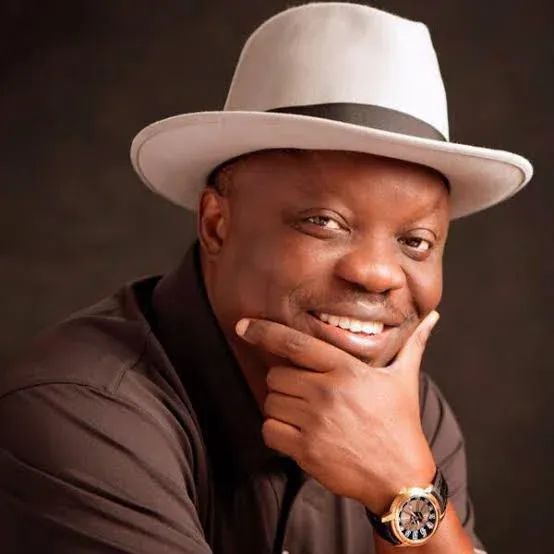
Late Dr Emmanuel Eweta Uduaghan, who died on Monday, 19 October 2026, aged 71, was one of the prominent political figures to emerge from Delta State. Beyond his eight years as governor, he had a professional career in medicine, served in key state government positions and championed policies intended to prepare the oil-producing state for a future beyond petroleum.
Here are 20 notable things to know about the late former governor, drawing on his career and published reports by Nigerian media organisations.
1. He was a medical doctor before becoming a politician
Uduaghan trained as a medical doctor at the University of Benin, where he studied from 1975 to 1980 and obtained a Bachelor of Medicine and Bachelor of Surgery degree. He later obtained a diploma in anaesthesia. His medical background influenced his subsequent emphasis on healthcare delivery as a public office holder.
2. He had experience in both public and private healthcare
Before entering the highest levels of Delta State politics, Uduaghan worked at the Delta Steel Company, Westend Hospital in Warri, Benoni Hospitals in Benin City and Shell Hospital in Ogunu. He subsequently established a private medical practice in 1994. His professional experience gave him first-hand exposure to healthcare delivery in different settings.
3. He served as Delta State Commissioner for Health
Uduaghan entered state government in 1999 when Governor James Ibori appointed him Commissioner for Health. He held the position until 2003, gaining administrative experience in a sector that would later become one of the defining areas of his governorship.
4. He was Secretary to the State Government before becoming governor
From June 2003 to 2007, Uduaghan served as Secretary to the Delta State Government. The position placed him at the centre of government administration and policy coordination before he succeeded Ibori as governor in May 2007.
5. He governed Delta State for eight years
Uduaghan served as governor from 29 May 2007 to 29 May 2015, completing two terms in office. His administration was organised around three principal priorities: peace and security, infrastructure development, and human capital development.
6. He championed the ‘Delta Beyond Oil’ vision
One of Uduaghan’s most recognisable policy initiatives was Delta Beyond Oil, a long-term economic diversification strategy designed to reduce the state’s dependence on crude oil revenue.
The programme promoted agriculture, tourism, manufacturing, commerce and other non-oil economic activities. He argued that Delta State needed to prepare for a future in which oil revenues might no longer be sufficient to sustain its development.
7. He introduced free maternal healthcare
In November 2007, his administration introduced a free maternal healthcare programme aimed at removing financial barriers to medical care for pregnant women.
The initiative sought to improve access to antenatal services and childbirth care, while reducing preventable maternal deaths. It was among the most prominent social programmes associated with his government.
8. He extended free healthcare to children under five
His administration also introduced a free under-five healthcare programme to improve access to medical treatment for young children.
The policy reflected the government’s emphasis on maternal and child health, particularly for families who might otherwise struggle to meet healthcare costs.
9. He supported the development of a major teaching hospital
The development and equipping of the Delta State University Teaching Hospital in Oghara was another significant healthcare project associated with his administration.
The hospital strengthened the state’s capacity for specialist medical care, medical training and clinical services. It also formed part of the wider ambition to improve healthcare infrastructure within Delta State.
10. He pursued the development of Asaba International Airport
The development of Asaba International Airport was one of the major infrastructure projects associated with Uduaghan’s administration.
The airport was intended to improve air connectivity, facilitate business and investment, and support economic activity in Delta State. Former Information Commissioner Chike Ogeah identified the airport among the administration’s notable infrastructure achievements.
11. He promoted the rehabilitation of schools and classrooms
Uduaghan’s government pursued an extensive school rehabilitation programme as part of its human capital development agenda.
In a 2024 retrospective published by Independent Newspaper Nigeria, Ogeah reported that the administration commissioned more than 13 model secondary schools and 54 model primary schools, alongside the remodelling of over 18,000 classrooms. These figures were presented as achievements of the administration.
12. He supported scholarships and student bursaries
His administration also promoted educational assistance through scholarship and bursary programmes.
A speech published in 2013 reported that Delta State provided annual bursary awards of ₦20,000 to eligible students of Delta origin in institutions of higher learning across Nigeria. It also referred to scholarship recipients studying abroad.
13. He sought to improve peace and security in the Niger Delta
Peace and security formed one of the three pillars of his administration. He governed during a period when militancy, oil-related tensions and insecurity posed serious challenges to the Niger Delta.
His government pursued engagement and broader efforts to stabilise communities in the oil-producing region. These efforts were part of the administration’s attempt to create a more favourable environment for development and investment.
14. He invested in transport and subsidised public transportation
Uduaghan’s development agenda extended beyond roads and airports to public transportation.
In a 2013 presentation on economic diversification, he said his administration provided buses of different sizes with a 50 per cent transport subsidy. The policy was intended to ease transportation costs and make mobility more affordable for residents.
15. He supported the development of commercial and event facilities
The Asaba and Effurun shopping malls and the Dome Event Centre were among the facilities associated with projects undertaken during his administration.
Such developments were intended to expand commercial activity, provide spaces for events and business, and support the state’s wider economic development objectives.
16. He promoted medical tourism as part of economic diversification
In February 2014, Uduaghan announced plans to position Delta State as a destination for medical tourism.
He argued that Nigeria could retain more of the money spent by citizens travelling abroad for treatment by improving domestic healthcare facilities and services. The proposal linked his professional background in medicine with his broader Delta Beyond Oil agenda.
17. His administration supported professional development for journalists
An account by former Delta State Commissioner for Information Chike Ogeah highlighted a training scheme approved by Uduaghan for journalists practising in the state.
According to Ogeah, more than 50 journalists, irrespective of their state of origin, benefited from training at the Reuters Institute in London over two years. The initiative was presented as part of the administration’s investment in human capital.
18. He received major media recognition during his governorship
In 2013, Uduaghan received recognition from several Nigerian media organisations. The Nation reported in January 2014 that he had been named Governor of the Year by Leadership Newspapers and Man of the Year by The Sun, Vanguard and Nigerian Pilot.
These awards reflected the recognition his administration received in some media circles, particularly for its development agenda. Such honours, however, represent the assessments of the awarding organisations rather than a definitive measure of overall governance performance.
19. He remained politically active after leaving office
Uduaghan’s political career continued after he handed over power in 2015.
He contested the Delta South Senatorial District seat in 2019 but lost to James Manager. He moved from the Peoples Democratic Party to the All Progressives Congress in 2018, returned to the PDP in 2020 and announced his retirement from active politics in 2022. In May 2025, he rejoined the APC.
His political journey illustrated the continuing importance of party realignments and regional political relationships in Delta State.
20. His legacy combines public health, infrastructure and economic planning
Perhaps the most significant way to assess Uduaghan’s public career is through the combination of his professional background, policy priorities and infrastructure projects.
His administration’s three-point agenda linked security, physical development and human capital, while Delta Beyond Oil provided a broader economic vision. His healthcare programmes, school projects, airport development and diversification efforts remain central to discussions of his years in office.
However, a balanced assessment of his legacy must consider not only projects initiated or completed, but also their long-term impact, sustainability, public value and the extent to which the state’s economy became less dependent on oil.
Conclusion: A physician who entered the arena of governance
Dr Emmanuel Uduaghan’s journey from medical practice to the Delta State Government House was an important chapter in the state’s political history. He brought a physician’s professional background into public administration and pursued policies spanning healthcare, education, infrastructure, security and economic diversification.
His Delta Beyond Oil vision remains one of the most distinctive ideas associated with his tenure, while his maternal and child healthcare initiatives formed a substantial part of his social policy agenda.
As tributes follow his death, a lasting assessment of his contribution will depend on how these policies and projects are remembered, sustained and measured against the needs of the people he served.
One thought on “20 Notable Things to Know About Late Dr Emmanuel Uduaghan”