By Ademola Ajao
THE National President of the National Union of Civil Engineering Construction, Furniture and Wood Workers (NUCECFWW), Comrade Stephen Igho Okoro, has called for urgent investment in the reskilling and capacity building of construction workers to keep them relevant in the face of automation and economic uncertainty.
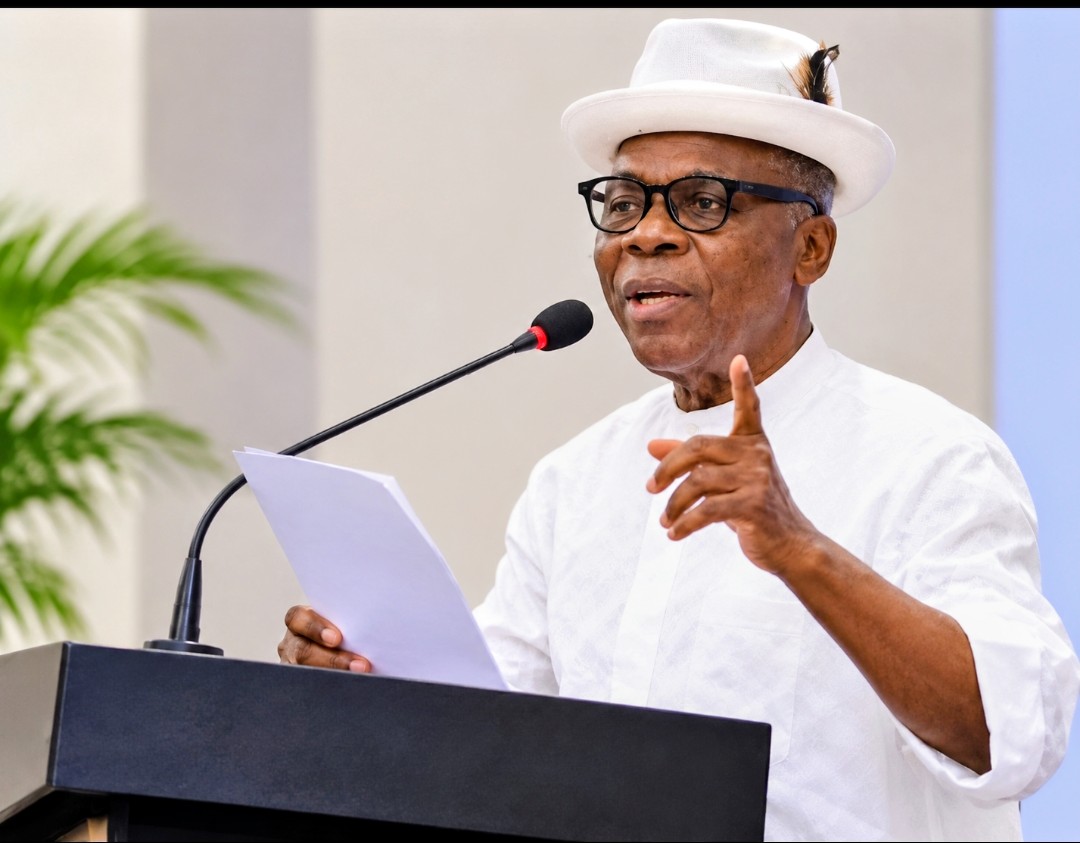
Comrade Okoro made the call while delivering the keynote address at the opening session of the union’s 21st Education/Industrial Relations Conference, held at the Faculty of Economics and Social Sciences, University of Ibadan, Oyo State, on Monday.
The conference, themed “Resilience and Re-skilling Construction Workers in the Age of Automation and Economic Uncertainty in Nigeria,” brought together union leaders, employers, academics, resource persons and delegates to deliberate on issues affecting workers and the construction industry.
The NUCECFWW president said automation, artificial intelligence, emerging building technologies and imported building materials were transforming the construction sector, stressing that workers must embrace continuous learning to remain employable.
“If we do not reskill, we will be replaced. If we are not resilient, we will be retrenched. Therefore, we must learn, unlearn and relearn,” he said.
He urged participants to pay close attention to the resource persons and to ensure that knowledge acquired at the conference was shared with members in their respective units, branches and state councils.
On workers’ welfare, Comrade Okoro reiterated the union’s zero-tolerance stance on casualisation, describing the practice as exploitation of workers who contribute to national development. He condemned the employment of workers as casuals for five, 10 or 15 years without access to gratuity, pension or other social protection, calling for sustainable strategies to achieve total decasualisation in the construction, civil engineering, furniture and wood industries.
The union leader urged members and state councils to report employers still engaging casual workers to their respective state council secretaries for onward transmission to the national secretariat for appropriate action.
He also called on state councils yet to acquire land and commence the construction of permanent secretariats to do so without further delay. According to him, the national secretariat is considering ending the payment of rental fees to state councils, while promising financial assistance to deserving councils that demonstrate commitment to building their own secretariats.
Comrade Okoro disclosed that the union’s ultra-modern office complex at Life Camp, Abuja, had reached the roofing stage, expressing appreciation to members and employers for their contributions towards the project.
On climate change, he said its effects, including flooding, extreme heat and desertification, had become increasingly evident across Nigeria, with workers, women and children among the most vulnerable. He called for increased advocacy on climate change mitigation and adaptation, as well as a just transition to a green economy that would protect workers’ rights and create decent, formal employment opportunities.
“A just transition that does not promote decent work and a friendly environmental working condition is not just,” he said.
The NUCECFWW president urged the Federal Government to enforce environmental and climate change laws and to ensure that climate policies and funding generated employment opportunities rather than job losses for construction workers.
Addressing the state of the nation, Comrade Okoro identified the high cost of living, insecurity, infrastructural decay, poverty, political tensions and corruption as major challenges requiring urgent government intervention. He noted that Nigerian workers had continued to demonstrate resilience despite prevailing economic difficulties, but warned that such resilience should not be mistaken for docility.
On transportation costs, Comrade Okoro, who is also a vice-president of the Nigeria Labour Congress (NLC), said the NLC and the Federal Government had agreed on a N70,000 transportation allowance as an intervention expected to last for six months. He appealed to local and state governments, as well as private-sector employers, to negotiate the allowance with workers, stressing that no worker should be excluded.
Comrade Okoro expressed appreciation to employers who had continued to sponsor workers to the conference, saying the programme was expected to enhance productivity, strengthen workers’ capacity and promote peaceful industrial relations. He also commended the University of Ibadan community, resource persons, sister unions and other stakeholders for their solidarity with the union.
The conference is expected to provide a platform for discussions on workers’ welfare, occupational health and safety, membership development, anti-union practices and the impact of climate change on the construction industry.