Ebenezer Adurokiya, Reporting
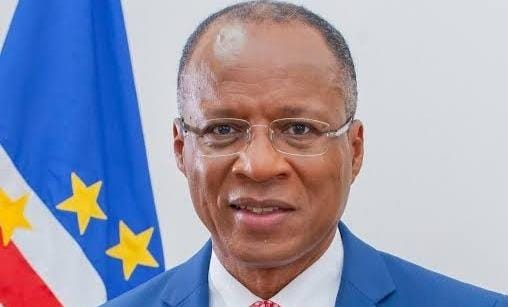
THE Economic Community of West African States (ECOWAS) has appointed former Prime Minister of Cabo Verde, Dr Ulisses Correia e Silva, to lead its 80-member Election Observation Mission (EOM) to The Gambia ahead of the country’s presidential election scheduled for 5 December 2026.
The mission, authorised by the President of the ECOWAS Commission, General Birame Diop (rtd), comprises 20 long-term and 60 short-term observers.
According to a press release issued in Banjul on Wednesday, 11 November, the deployment is in line with relevant ECOWAS legal instruments, particularly the 2001 Supplementary Protocol on Democracy and Good Governance, which provides for assistance to member states conducting elections.
The 20 long-term observers, comprising experts in constitutional and electoral laws, election administration, security, diplomacy, political affairs, conflict management, gender, civil society and the media, were deployed on Monday, 10 November.
They will be joined ahead of the election by 60 short-term observers drawn from the ECOWAS Permanent Representatives’ Committee, foreign affairs ministries and electoral management bodies of member states, the ECOWAS Council of the Wise, the Community’s Parliament and Court of Justice, as well as civil society organisations and the media.
The mission will receive technical support from a team led by the ECOWAS Commissioner for Political Affairs, Peace and Security, Madam Francess Piagie Alghali.
Other members of the technical team include the Director of Political Affairs, Dr Babatunde Afolabi, and the Head of the Electoral Assistance Division, Mr Serigne Mamadou Ka.
As part of its activities, the mission will engage key stakeholders, including political parties, the Independent Electoral Commission (IEC), civil society organisations and representatives of development partners.
It will also establish a Situation Room to monitor developments and alert ECOWAS authorities to areas requiring proactive intervention.
The observers will monitor critical stages of the electoral process before, during and after the poll, with their assessments expected to serve as early-warning and rapid-response mechanisms for preventing and managing election-related disputes or conflicts.
The mission will also assess the extent to which the electoral process complies with regional instruments and international standards.
The Gambia’s Independent Electoral Commission has registered 1,146,474 voters out of an estimated population of 2.9 million for the election.
Voting will take place across 1,773 polling stations in 43 Local Government Areas spread across eight districts.
The IEC Chairman, Joseph Kolley, announced on 2 November that 27 prospective presidential candidates, including incumbent President Adama Barrow, had collected nomination forms for the December 5 election.
The country has 24 registered political parties, while Barrow, who came to power in December 2016, is seeking a third term under the ruling National People’s Party (NPP).
The Gambian president is elected for a five-year tenure through a single-round, first-past-the-post system based on a simple majority.
The country operates a distinctive voting system in which voters use marbles instead of paper ballots or electronic voting devices. The marbles are dropped into drums representing the respective candidates’ political parties.
The electoral system operates under the 1992 Constitution, which was introduced during the administration of former President Yahya Jammeh.
Jammeh ruled The Gambia for 22 years before losing the December 2016 presidential election to Barrow. However, his refusal to accept the outcome triggered a political crisis that prompted ECOWAS-led intervention and eventually forced him into exile in Equatorial Guinea.
Efforts to introduce a new constitution under Barrow’s administration were unsuccessful after disagreements between the presidency and parliament over several provisions, including presidential term limits.
ECOWAS said the deployment of the observation mission reaffirmed its commitment to supporting member states in conducting credible, transparent and peaceful elections as part of efforts to strengthen democracy, good governance and regional stability.