Muhammed Abubakar, Reporting
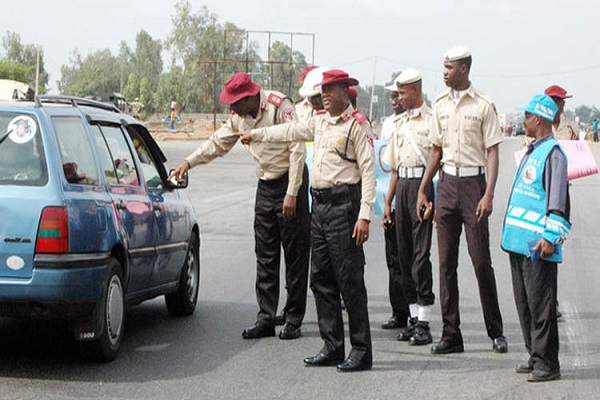
A Federal High Court in Kano has delivered a landmark judgment restricting the Federal Road Safety Commission (FRSC) from operating on state and local government roads, declaring that its officers acted beyond their statutory powers when they stopped and questioned motorists within the Kano metropolis.
Delivering judgment on Thursday, Justice M. S. Shuaibu held that FRSC personnel exceeded their jurisdiction when they mounted checkpoints on township roads and detained motorists in July 2025.
The court found that such actions violated the constitutional rights to personal liberty and freedom of movement as enshrined in Sections 35 and 41 of the 1999 Constitution .
The ruling came in response to a fundamental rights enforcement suit filed by Kano-based lawyer, Abba Hikima, who was stopped by FRSC operatives on a township road despite committing no traffic offence.
The officers had demanded his driver’s licence and subjected him to questioning, prompting the legal challenge .
Justice Shuaibu granted all the principal reliefs sought by the applicant, including a perpetual injunction restraining FRSC officers from further stopping, harassing, or delaying motorists on Kano State roads without lawful authority.
The court also ordered the commission to publish a public apology in a national newspaper and awarded ₦800,000 in damages and costs to the applicant .
Mr Hikima had argued that the FRSC’s enabling Act only empowers the agency to operate on federal highways, not on roads under the control of state or local governments.
The court affirmed this position, reinforcing the constitutional protections guaranteeing citizens’ rights to personal liberty and freedom of movement .
Reacting to the judgment, Mr Hikima described the verdict as “a landmark victory for the rule of law,” stating that it reaffirms that law enforcement agencies must operate strictly within the limits of the Constitution and their enabling statutes.
He said the decision was “a victory for every law-abiding motorist subjected to unlawful stops and harassment on roads where the FRSC has no legal jurisdiction” .
The ruling is expected to spark fresh debate over the extent of the FRSC’s enforcement powers, particularly on roads under the control of state and local governments .
It follows previous judicial pronouncements on similar matters, including a 2023 Court of Appeal decision in Asaba which held that the FRSC had no business policing state or local roads .
As of press time, the FRSC had yet to issue an official statement on whether it would appeal the judgment.