Ebenezer Adurokiya, Reporting
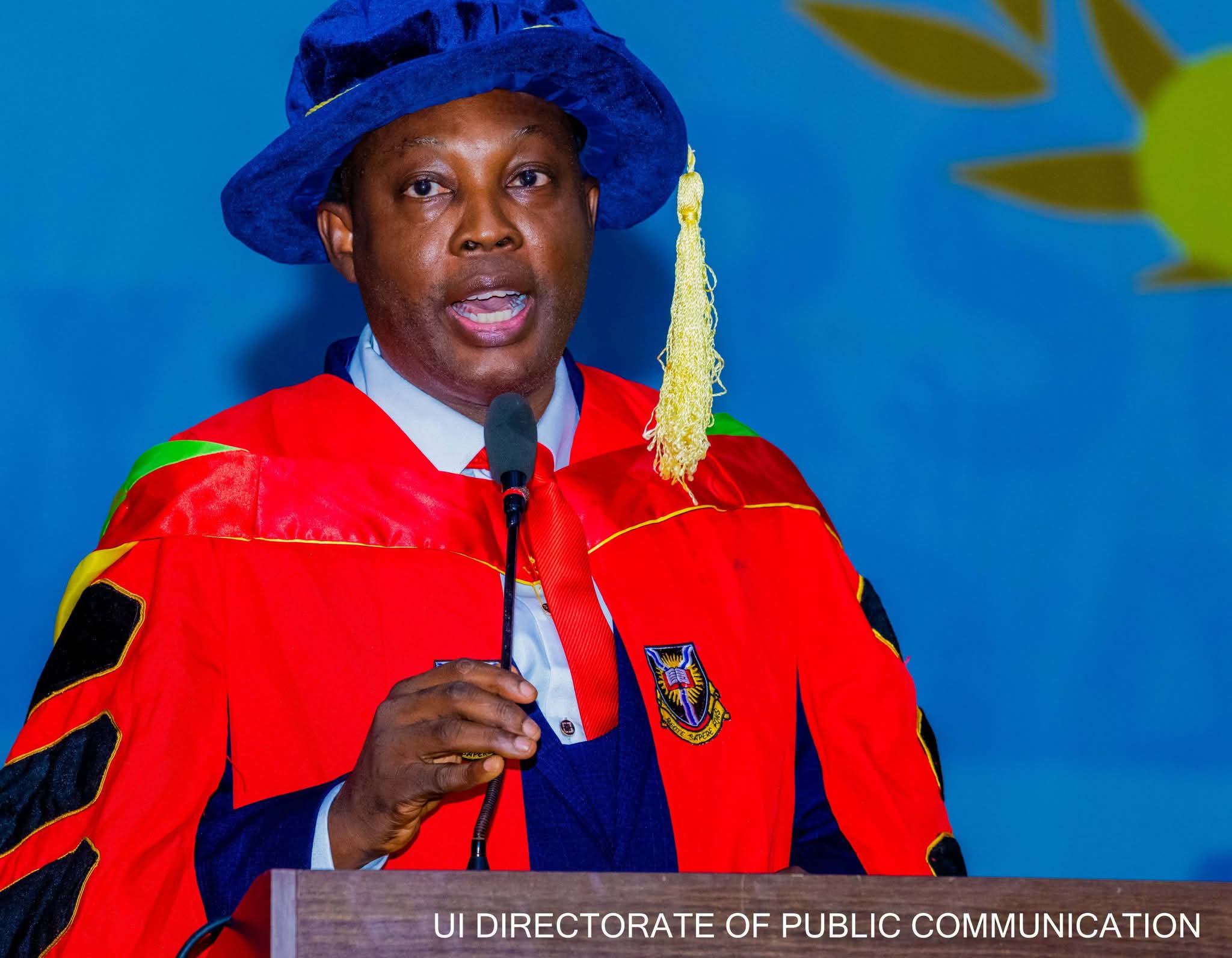
A Professor of ICT and Cybersecurity at the University of Ibadan (UI), Professor Oluwaseyitanfunmi Osunade, has called for the integration of human and machine communication systems to improve effective data exchange.
Professor Osunade made the call while delivering the 623rd Inaugural Lecture of the University of Ibadan on behalf of the Faculty of Computing.
The lecture, titled “Send, Receive: How Do You Do?”, focused on the principles of data communication, cybersecurity and the growing role of indigenous technology in Nigeria’s digital transformation.
Professor Osunade emphasised the need for a deeper understanding of the principles guiding data communication systems, noting that both humans and machines depend on shared protocols to exchange information effectively.
He explained that data communication involves transmitting messages from a sender to a receiver through symbols or electrical signals, guided by negotiated rules which he described as “established protocols”.
According to him, the principles governing communication between computers also offer valuable lessons for human relationships and organisational management.
He said the sender prepares and transmits a message, while the receiver interprets the signal and converts it back into meaning.
The don explained that the “How do you do?” element of the lecture title represented the protocols that must be agreed upon before any exchange can take place.
Professor Osunade described data communication as a discipline at the intersection of physics, electrical engineering and computer science, saying it was both a science of infrastructure and an art of crafting messages that resonate with human experience.
He disclosed that much of his research had been built around a modified version of the Shannon-Weaver Communication Model, incorporating a feedback mechanism that transforms the traditional linear model of communication into a cyclical one.
The university don also highlighted some of his research contributions to digital communication and cybersecurity, including the development of indigenous character-based CAPTCHA systems designed around Yoruba and Igbo accented characters.
He said the NaijaCAPTCHA and E-NaijaCAPTCHA systems were developed to strengthen online security by making automated attacks more difficult while incorporating Nigerian linguistic elements into digital authentication.
According to him, the systems demonstrated strong resistance to automated attacks during testing and could be deployed on Nigerian e-commerce platforms, government websites and other digital platforms requiring secure authentication.
Professor Osunade identified emerging areas in data science, software engineering, cybersecurity and computer science, noting that data science was increasingly moving towards operational scalability, privacy and specialised intelligence.
He said software engineering was being shaped by autonomous coding agents, cloud complexity and the development of trustworthy automated systems.
He added that cybersecurity was shifting from conventional perimeter protection towards continuous identity verification, automated resilience and adaptive systems.
The don further noted that computer science was being transformed by developments in physical and spatial intelligence, new computing architectures and the need for greater mathematical guarantees in probabilistic software.
To improve digital communication in Nigeria, Professor Osunade recommended the adoption of more effective communication systems, including a document management system to replace paper-based memoranda.
He also called for the optimisation of the existing email system to support Nigerian languages and improve both broadcast and personal messaging.
The Professor of ICT and Cybersecurity advocated the integration of Nigerian languages into digital communication systems and recommended the adoption of a national keyboard incorporating indigenous characters for Nigerian languages.
He urged governments to support cybersecurity systems developed from indigenous knowledge and recommended the adoption of context-aware essay assessment technology capable of recognising Nigerian English in national and international examinations.
Professor Osunade stressed the need for research to remain responsive to societal realities, demonstrating how data communication, cybersecurity and indigenous technological solutions could contribute to Nigeria’s digital transformation and national development.
He also called for increased funding for polytechnics and vocational schools to produce technically competent manpower for the regulation of digital communication systems.
The don urged the government to encourage indigenous technologies and provide national recognition, support and funding for Nigerian entrepreneurs developing digital communication systems.
The lecture was the 20th in the series for the 2025/2026 academic session.