
By Stonix News
THERE are deaths that leave behind grief. There are others that leave behind questions.
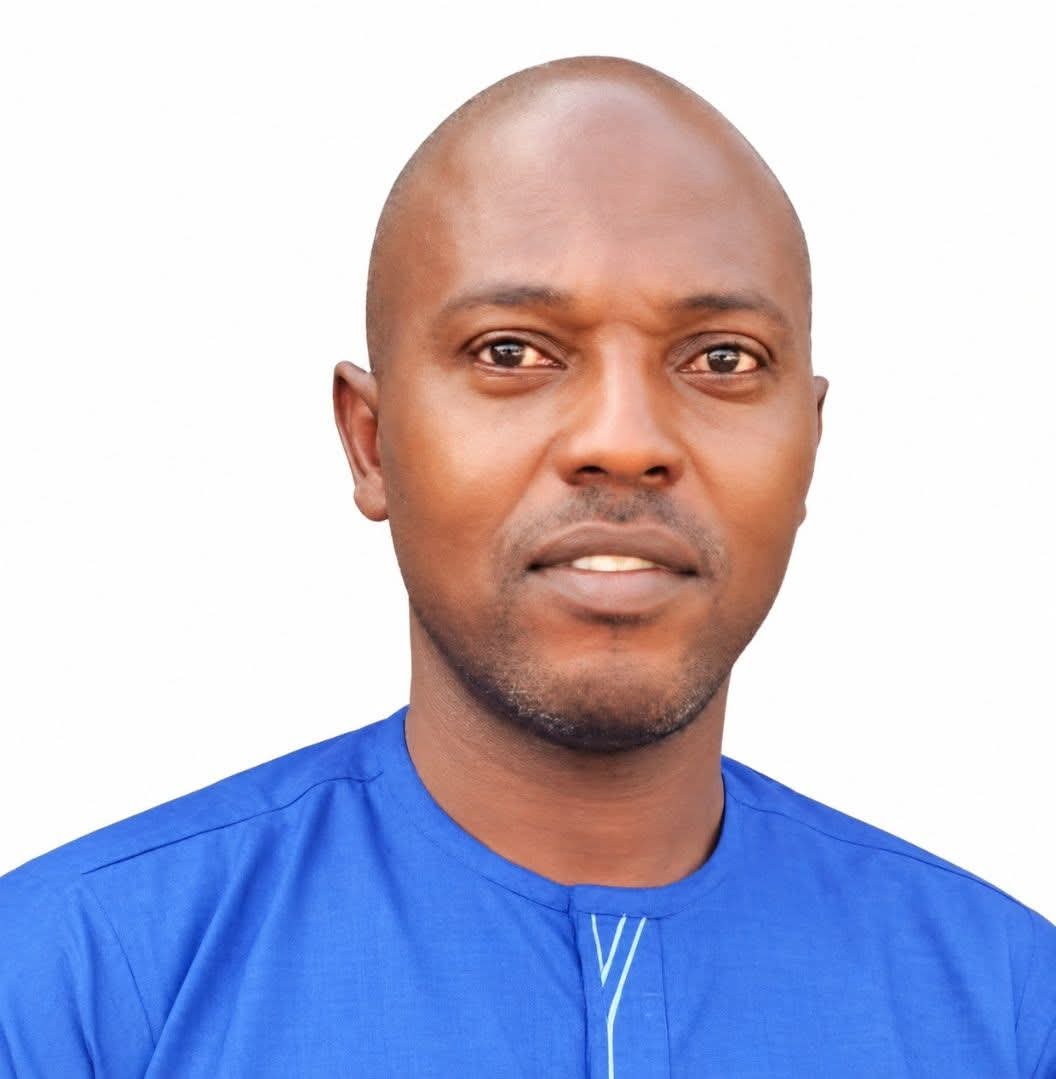
The death of 46-year-old Olatunde Joseph Ojelabi in Lagos belongs to the second category.
Ojelabi did not reportedly arrive at Lagos State University Teaching Hospital, LASUTH, dead. He arrived alive, following a road traffic accident, and in need of urgent medical attention.
Six days later, he was dead.
Between those two moments lies a chain of events that his family says deserves answers.
Ojelabi’s elder brother has given a deeply disturbing account that has gone viral on social media of what happened after the accident on 6 September 2026.
According to him, Ojelabi was driving his family to church when he swerved to avoid a commercial tricycle that allegedly made an abrupt turn on Ijegun Road, Ikotun, Lagos. His vehicle subsequently crashed into a stationary vehicle.
He sustained severe facial injuries and was initially taken to a private hospital before being referred to LASUTH.
The family says he arrived at LASUTH’s Medical Emergency Unit before 9am.
What happened next is the heart of the matter.
The elder brother alleges that his brother was left waiting outside the emergency ward for several hours because there was reportedly no available bed.
Eventually, according to the account, Ojelabi’s condition deteriorated. He convulsed and suffered cardiac arrest before medical intervention was undertaken.
He was resuscitated, underwent a tracheostomy and was transferred to the Intensive Care Unit.
The family has now been left with a question that should concern every Nigerian: what happens when a critically injured citizen arrives at a major public hospital and there is no bed available?
Does the absence of a bed mean the absence of emergency care?
That question requires an urgent and factual answer.
This is not an argument that every patient who dies in a hospital has been failed by the hospital. Medicine does not guarantee survival. Some injuries are simply too severe, and even the fastest and most sophisticated intervention cannot save every life.
But that is precisely why the circumstances surrounding Ojelabi’s treatment must be examined.
If the family’s account is accurate, the issue is not merely that a man died after a terrible accident. The issue is whether there was a critical period during which appropriate emergency intervention could have been provided but was not.
Only the medical records, treatment timeline and an independent professional review can establish that.
The family’s allegations about communication are equally troubling.
He says relatives were asked to purchase medications costing millions of naira without adequate explanation of the treatment strategy or the purpose of some of the drugs. He says he eventually had to seek the assistance of a senior doctor to obtain a proper briefing about his brother’s condition.
Again, these claims require verification.
But even as allegations, they expose a wider problem within Nigeria’s healthcare system: the patient and the family can sometimes become lost in the machinery of healthcare delivery.
A critically ill patient is not merely a diagnosis.
Behind every hospital bed is a human being whose family is waiting for information, hoping for recovery and trying desperately to understand what doctors are doing.
Communication should therefore not be regarded as an optional courtesy. It is part of compassionate patient care.
Then there is the account that relatives were asked to buy a bucket, towel and detergent to clean blood from the floor of the emergency area.
If accurately reported, this is the kind of experience that should make healthcare administrators uncomfortable.
Families bring sick relatives to hospitals because they expect trained personnel and appropriate systems to take charge of emergencies.
They should not be made to feel as though they are navigating the emergency department alone.
But this story must also be viewed within the broader crisis confronting Nigeria’s public healthcare system.
The problem is bigger than LASUTH.
Across the country, public hospitals grapple with overcrowding, shortages of equipment, inadequate staffing, funding constraints, poor infrastructure and the migration of healthcare professionals.
Yet Nigerians continue to need these hospitals, particularly during emergencies.
The contradiction is glaring.
We have hospitals staffed by Nigerians who are capable of providing excellent medical care. We have doctors, nurses, pharmacists, surgeons and other professionals who work under enormous pressure.
But the system in which they operate can sometimes make the delivery of that care unnecessarily difficult.
That is why the answer cannot simply be to blame doctors.
Nor should systemic weaknesses become a shield against accountability.
Both truths can exist at the same time: healthcare workers can be working under extraordinarily difficult conditions, and healthcare institutions can still be required to answer legitimate questions about the care provided.
Ojelabi’s case therefore deserves something more useful than social-media outrage.
It deserves an investigation.
What time did he arrive at LASUTH?
What was his initial clinical assessment?
Was he triaged immediately?
What treatment was administered?
Was there genuinely no available emergency bed?
If there was no bed, what alternative arrangement was made?
What happened during the hours before his cardiac arrest?
What interventions were carried out?
What did the medical records show about his condition?
And perhaps the most important question: is there evidence that any delay contributed to his eventual death?
These are not questions that should be answered with emotion.
They should be answered with records, professional assessment and transparency.
The Lagos State Government and LASUTH management therefore have an opportunity to demonstrate that accountability is not merely a slogan.
If the family has misunderstood what happened, explain it.
If the hospital’s procedures were followed, let the evidence show that.
If there were resource constraints, acknowledge them.
If there were failures, identify them.
And if improvements are required, make them.
The worst possible outcome would be for Olatunde’s death to disappear into the statistics of road accidents and hospital deaths without anyone examining what happened.
Because another accident will happen.
Another injured person will be taken to an emergency department.
Another family will wait anxiously outside an operating theatre or ICU.
The question is whether the system will be ready.
There is a tendency in Nigeria to become outraged when tragedy occurs and then move on when public attention fades.
That cycle must end.
Healthcare reform is not only about constructing new hospitals or purchasing sophisticated equipment. It is also about emergency protocols, adequate bed capacity, efficient triage, staffing, communication, accountability and ensuring that patients receive timely attention when minutes matter.
Olatunde Joseph Ojelabi’s story has brought all of these issues into sharp focus.
His brother’s account is an allegation, not a judicial finding. It is therefore important that LASUTH and the relevant authorities be given the opportunity to respond and that the facts be established independently.
But the allegations are too serious to ignore.
A man went to church that Sunday intending to give thanks for another year of life.
Instead, an accident changed everything.
He turned 46 the following day while unconscious and fighting for his life.
Five days later, he died.
For his family, 7 September will forever be both his birthday and a painful reminder of the life they hoped he would continue to live.
There is no commentary that can repair that loss.
But there can be accountability.
And there can be lessons.
If Olatunde’s experience exposes a weakness in the emergency healthcare system, then his death should compel authorities to fix it.
Because the true measure of a healthcare system is not how it treats the patient who can afford everything.
It is how it responds when an injured citizen arrives at the door, vulnerable, frightened and dependent entirely on the system to save his life.
Olatunde Joseph Ojelabi arrived at LASUTH alive.
His family deserves to know exactly what happened afterwards.
And Nigerians deserve a healthcare system in which the first question in an emergency is not whether there is a bed, but how quickly a human life can be saved.
May his soul rest in peace.
