Agorehmi Bright, Reporting
FORMER President Goodluck Jonathan and Bayelsa State Governor, Senator Douye Diri, have called for greater equity, accountable leadership and a fairer national arrangement to address Nigeria’s persistent challenges of nationhood, governance and resource distribution.
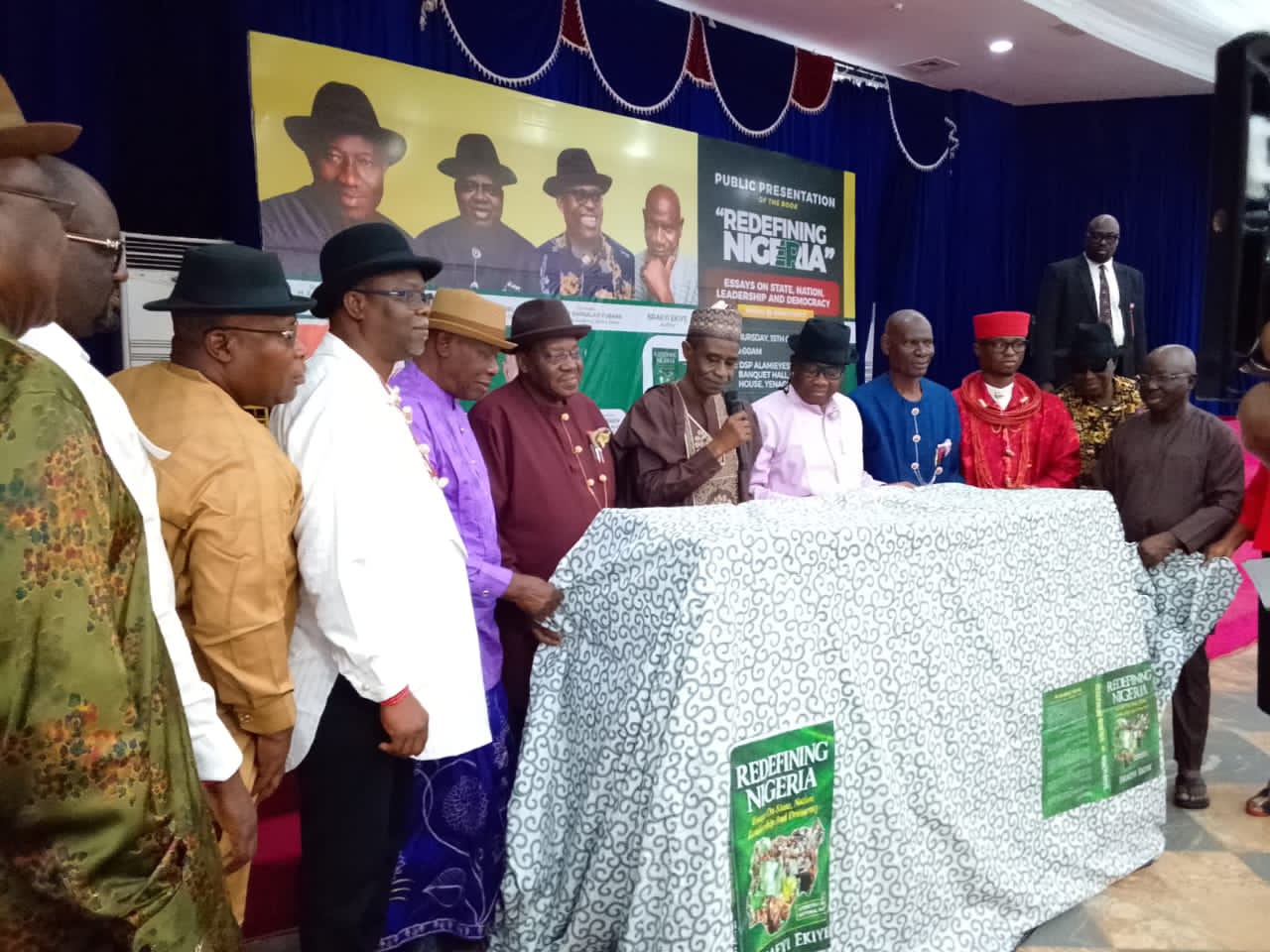
Their positions were conveyed at the public presentation of Redefining Nigeria: State, Nation, Leadership and Democracy, authored by Braeyi Ekiye, at the DSP Alamieyeseigha Banquet Hall, Government House, Yenagoa, Bayelsa State.
Representing Mr Jonathan at the event, former Governor of Adamawa State, Boni Haruna, said the book had come at a critical moment in Nigeria’s national development, when fundamental questions about the country’s identity, political institutions and democratic aspirations required urgent attention.
Mr Haruna, who recalled his longstanding relationship with the author, said their paths had crossed during his years in public office, with their relationship growing through shared experiences and a commitment to public service.
He noted that Mr Ekiye had continued to contribute to national development through his professional engagements, intellectual work and dedication to public service.
According to him, the book offers an opportunity for Nigerians to reflect on the country’s political and economic arrangements, the quality of its leadership and the values required to build a more united nation.
He stressed that building the Nigeria citizens desired would require purposeful leadership, constructive national dialogue and active participation by the people.
In his remarks, Deputy Governor Peter Akpe, who represented Governor Diri, said the book raised fundamental questions about national identity, citizenship, the distribution of power and resources, and the responsibilities of leaders to the people.
Mr Akpe said the issues were particularly significant to the Niger Delta, whose people had contributed substantially to Nigeria’s economic wealth whilst enduring environmental degradation and persistent development challenges.
He cited the difficulties confronting fishermen, farmers and coastal communities, including the destruction of farmlands, degradation of fishing waters and other environmental problems associated with the region’s development concerns.
The deputy governor stressed the need for a more inclusive national arrangement that would ensure equitable development, restore public confidence in government and strengthen accountability in public institutions.
He added that findings and recommendations from relevant commissions on environmental degradation and development in the Niger Delta should inform national conversations about justice, equity and the relationship between the region and the rest of the country.
Mr Akpe also emphasised the importance of intellectual contributions to national development, noting that books could challenge established assumptions, stimulate public debate and encourage citizens to demand a more just and accountable society.
In his contribution, Mr Ekiye advocated the restructuring of Nigeria to enable the constituent units of the federation to determine their development priorities and future within the Nigerian union. He argued that the country’s existing arrangements had placed an unequal burden on some sections of the country whilst allowing others to benefit disproportionately from national resources and opportunities.
The author maintained that the concerns could no longer be ignored, calling for a collective commitment to addressing perceived inequalities through lawful and democratic means.
He, however, rejected violence as a means of pursuing political demands, urging Nigerians to embrace dialogue, unity and legitimate democratic processes.
Mr Ekiye called on the people, particularly those from the Niger Delta, to unite in demanding their rights and a fair share of the country’s resources and development opportunities.
He said respect for the sovereignty of the Nigerian people and a united approach to addressing national concerns were essential to building a stronger federation.
The book was reviewed by Professor G.G. Darah, whilst Ambassador Godknows B. Igali, PhD, delivered the opening remarks. Dr Boma Spero Jack chaired the occasion.
The event attracted dignitaries from different sectors, including political leaders, academics and other stakeholders interested in Nigeria’s governance and democratic development.