Ebenezer Adurokiya, Reporting
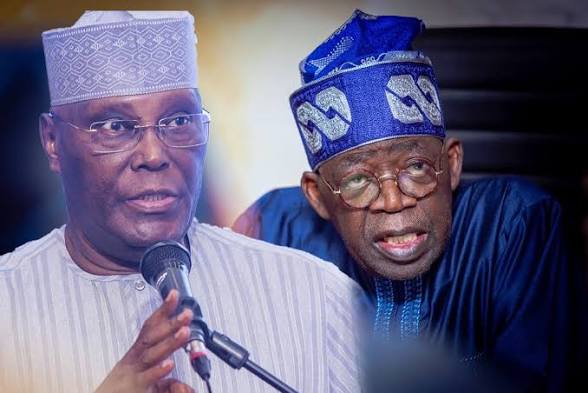
FORMER Vice-President Atiku Abubakar has called on President Bola Tinubu to use the remaining months of his administration to take measures that would reduce petrol prices and ease the cost-of-living pressures facing Nigerians.
Atiku made the call on Friday in Abuja during an address focused on fuel prices, government palliatives and the wider economic situation. His remarks were also circulated in a video posted on Facebook by Premium Times.
The African Democratic Congress (ADC) presidential candidate urged Tinubu not to reject a policy proposal simply because it originated from a political opponent.
According to him, the priority should be ensuring that Nigerians pay less for petrol and other essential goods and services.
“Bola Tinubu should not be ashamed to do what is necessary to lower the price of petrol simply because Atiku Abubakar proposed a government intervention,” he said.
“He should just take the idea. Rename it if he wishes. And even take the credit. What matters to me is that Nigerians pay less.”
Atiku added: “A sensible idea does not become a bad idea because it came from your opponent. If responsible intervention can lower prices, intervene. If changing course can help Nigerian families, change course.”
He said Tinubu had approximately eight months remaining in office and should use the period to provide relief to Nigerians.
The former Vice-President also criticised reliance on palliatives, arguing that emergency assistance could not replace policies aimed at addressing the underlying causes of economic hardship.
“Nigerians do not need another elaborate palliative ceremony,” he said. “Do not make life unbearable and then distribute bags of rice as evidence of compassion.”
He added that a bag of rice could not repair an economy where transportation costs exceeded workers’ incomes, while cash transfers could not permanently compensate workers whose purchasing power was being eroded by rising energy costs.
“Emergency assistance has its place, but palliatives cannot substitute for sound economic policy,” Atiku said.
He argued that economic reforms should ultimately expand production, create opportunities and improve living standards, rather than become “an endless explanation for hardship”.
Atiku also warned against the planned phase-out of electricity subsidies from 2027, saying households, small businesses and manufacturers were already under pressure from high electricity, diesel and alternative power costs.
“The lesson of petrol must not be repeated with electricity,” he said, urging the government not to impose additional costs before considering how families and businesses would cope.
Atiku further offered to make his policy framework available to the Tinubu administration if it could help reduce the burden on Nigerians.
“If you need the framework, I will provide it. Implement it under your government. Give it whatever name you choose. Take the credit,” he said.
“I ask for only one thing: Let Nigerians breathe.”
He said his political contest with Tinubu should not take precedence over the welfare of Nigerians.
“I am prepared to compete with you politically. But I will never compete with the welfare of the Nigerian people,” he said.
Looking ahead to the 2027 election, Atiku said that, if elected, he would introduce a transparent production subsidy for petroleum products refined in Nigeria and sold to Nigerians.
He said the proposed scheme would apply only to products confirmed to have been refined domestically, with a fixed spending limit, National Assembly approval and independent audits.
Atiku said the broader objective was to build an economy in which increased production would translate into more jobs, greater purchasing power and improved living standards.
“Nigerians do not live on statistics. They live on what their hard-earned money can buy,” he said.