
Rita Enemuru, Reporting
AS Nigeria marks the 2026 Democracy Day anniversary, leaders of the National Democratic Congress (NDC) and a prominent human rights lawyer have called for renewed efforts to ensure that democratic governance translates into improved living standards, economic opportunities and greater accountability for citizens.
Former Deputy President of the Senate and NDC leader, Senator Ovie Omo-Agege, said the significance of June 12 lies not only in the restoration of democratic rule but also in the ability of elected governments to improve the lives of ordinary Nigerians.
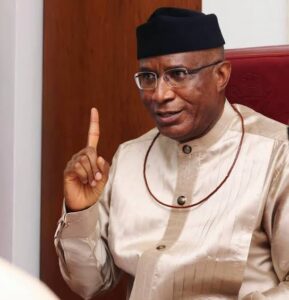
Speaking with Stonix News on the legacy of the late Chief MKO Abiola and the June 12 struggle, Omo-Agege, who recently defected from the ruling APC, said Nigerians now enjoy political freedoms won through the sacrifices of pro-democracy activists, but noted that many citizens remain concerned about the lack of visible democratic dividends.
According to him, democracy should be measured by whether it improves the welfare of the average Nigerian.
“People are asking where the benefits of democracy are. There is hunger, insecurity and poor infrastructure. The problem is not democracy itself but our failure to make it deliver meaningful results for the people,” he said.
The former Delta Central senator maintained that Abiola’s vision was a Nigeria where every vote counted and where democratic governance created opportunities and prosperity for all citizens.
He stressed that the NDC’s vision for 2027 is centred on ensuring that democratic participation translates into better public services, jobs, security and economic growth.
On electoral reforms, Omo-Agege urged the Independent National Electoral Commission (INEC) to strengthen public confidence in the electoral process by prioritising transparency at polling units.
He commended reforms such as the Bimodal Voter Accreditation System (BVAS), saying they had contributed to reducing electoral malpractice, but called for improved training and protection of election officials, particularly National Youth Service Corps members deployed as ad hoc staff.
The former governorship candidate of the APC in 2023 also advocated open vote counting, prompt display of polling unit results and effective collaboration between electoral officials and political parties.
He argued that while technology remains important, credible elections ultimately depend on transparency and strict adherence to electoral laws.
“Trust is built at the polling unit. If votes are counted openly, results displayed and party agents receive copies, Nigerians will have confidence in the process,” he said.
Omo-Agege urged young Nigerians to participate actively in the democratic process and resist attempts to sell their votes, describing the Permanent Voter Card as a powerful instrument for political change.
Meanwhile, NDC House of Representatives candidate for Warri Federal Constituency and National Coordinator of the Centre for Peace and Environmental Justice, Chief Sheriff Mulade, called for deeper democratic reforms to address the socio-economic challenges confronting the country.
In a Democracy Day message titled ‘Nigeria’s Democracy Day: Reflections, Challenges and the Way Forward’, Mulade acknowledged the progress made since the return to civilian rule in 1999, particularly in the areas of political participation, freedom of expression and civic engagement.
He noted that Nigeria’s uninterrupted democratic journey over the past 27 years remains a significant achievement, given the country’s history of military interventions.
However, the Gbaramatu chief said democracy must move beyond periodic elections and focus on improving the quality of life of citizens.
According to him, persistent poverty, unemployment, insecurity, poor infrastructure and limited access to quality healthcare and education continue to undermine the benefits of democratic governance.
He identified weak institutions, corruption, electoral challenges, poor governance and economic inequality as major obstacles to democratic consolidation.
The peace and environmental rights advocate also highlighted gains recorded in civil society engagement, environmental justice and community development since 1999, while lamenting inadequate funding, weak policy implementation and youth unemployment.
On the economy, Mulade said current reforms could yield positive long-term outcomes if accompanied by social protection measures and strategic investments in key sectors such as agriculture, manufacturing, education, healthcare and infrastructure.
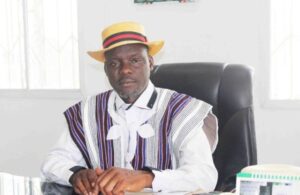
He urged government at all levels to strengthen democratic institutions, promote transparency and accountability, diversify the economy, invest in human capital development and improve security across the country.
“Democracy should be judged not only by political stability but by its ability to provide security, economic opportunities, social justice and improved living conditions for all Nigerians,” he stated.
Also speaking to Stonix News on the state of Nigeria’s democracy, Warri-based human rights lawyer, Barrister Oghenejabor Ikimi, argued that the sacrifices made by MKO Abiola and other pro-democracy activists had yet to be fully justified by the country’s current political realities.
According to him, many of those who fought for democratic governance eventually became part of a political class that now exercises enormous power over ordinary citizens.
“I do not think that the sacrifices made by MKO Abiola and other eminent Nigerians in the struggle for democracy are justified with the current political realities in the country. Immediately power was handed over to those who fought for democracy, many became the new oppressors just like the military rulers they replaced,” he said.
On preparations for the 2027 general elections, Ikimi expressed reservations about the capacity and independence of INEC, describing the electoral body as one of the nation’s weakest institutions.
He argued that genuine electoral independence would remain difficult to achieve as long as the commission’s leadership is appointed by the President.
The legal practitioner cited the conduct of the 2015 elections under former President Goodluck Jonathan as an example of how political will can influence electoral credibility.
“I am not confident with the present INEC as we prepare for the 2027 general elections. An electoral body that watches flawed party primaries without taking action raises questions about its ability to conduct completely free and fair elections,” he stated.
On the issue of real-time transmission of election results, Ikimi said Nigerians themselves must take collective responsibility for ensuring credible elections rather than relying solely on technology.
Drawing lessons from Japan’s post-war development, he argued that national commitment to democratic values and accountability is more important than constitutional or technological arrangements.
“If Nigerians truly desire free, fair and credible elections, we can achieve them collectively even without real-time transmission of results,” he said.
Addressing the challenge of vote-buying and vote-selling, Ikimi linked the problem to widespread poverty and economic hardship.
He maintained that meaningful electoral reforms must be accompanied by policies that tackle hunger and unemployment.
“We must address the pandemic of poverty and hunger in our country. In a nation where millions of citizens are living below the poverty line, both vote-buying and vote-selling will continue to thrive. Electoral enlightenment alone cannot succeed when people are hungry,” he said.
The lawyer added that voter education campaigns would become more effective once government addresses the underlying economic conditions driving electoral inducement.
The stakeholders agreed that while Nigeria has made considerable progress since the return to democratic rule, more work is required to bridge the gap between democratic ideals and the realities facing millions of citizens.
They expressed optimism that with stronger institutions, accountable leadership and active citizen participation, Nigeria’s democracy can deliver greater prosperity and inclusive development for all.