Rita Enemuru, reporting
THE Nigerian Navy has linked its intensified maritime security operations to Nigeria’s crude oil production reaching a 74-month high, saying improved security across the Niger Delta has helped create conditions for increased production and renewed investor confidence.
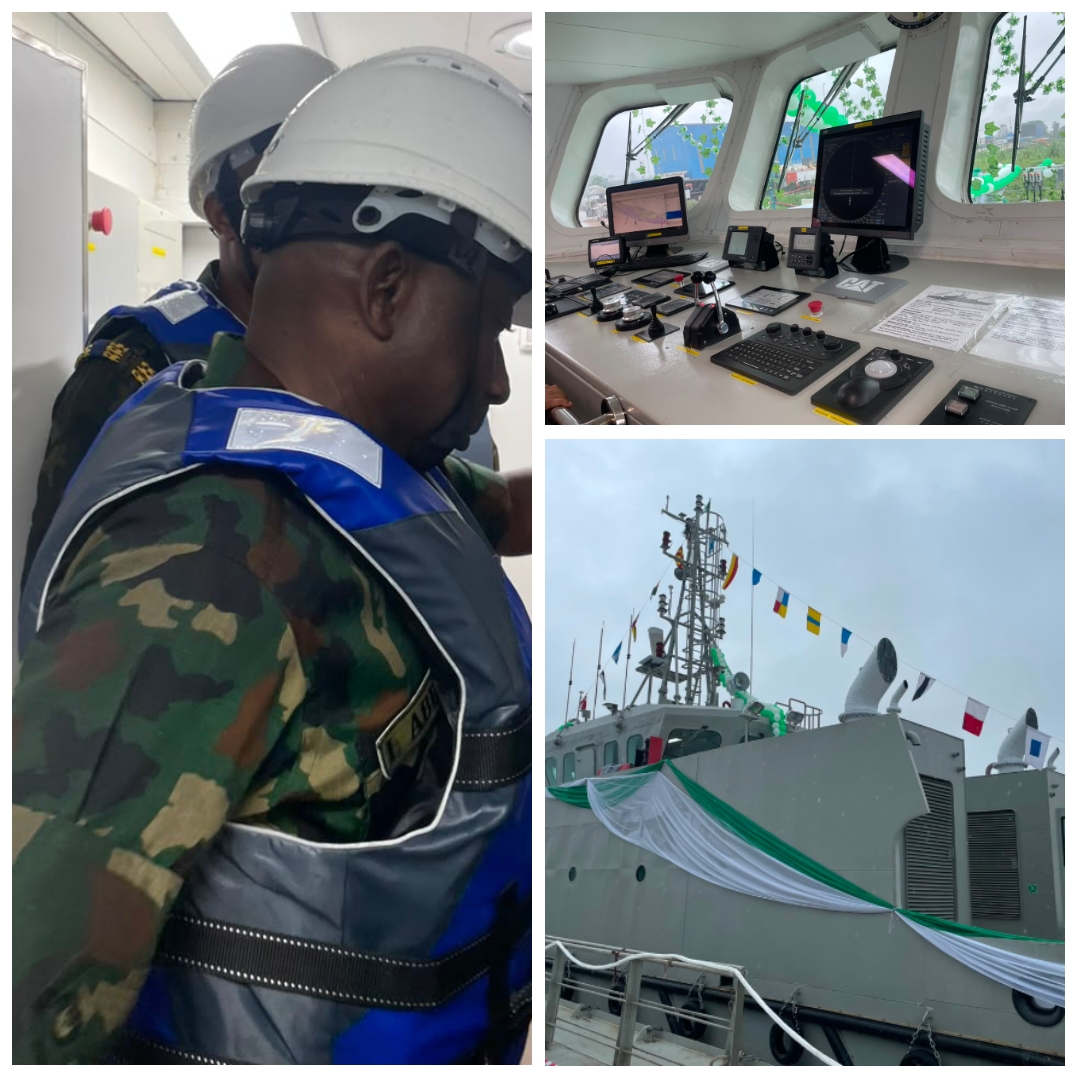
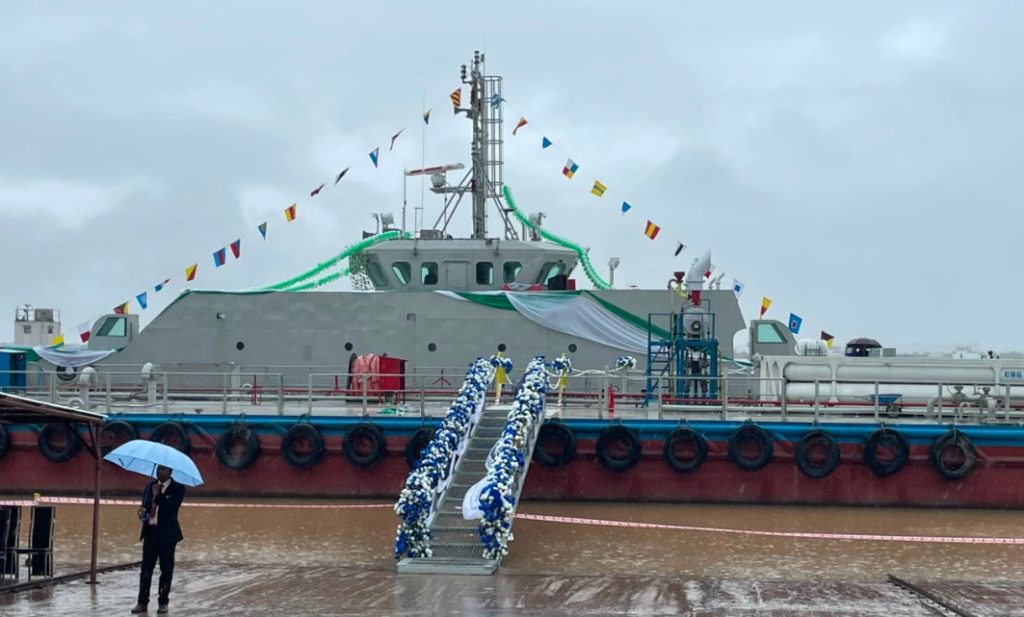
The Chief of the Naval Staff (CNS), Vice Admiral Idi Abbas, made the assertion on Wednesday, August 19, 2026, during the inauguration of the SSV-KALI 3 Security Patrol and Support Vessel at Yade Barge, Niger River Bank, Asemoku Jetty, Okpai, Ndokwa East Local Government Area of Delta State.
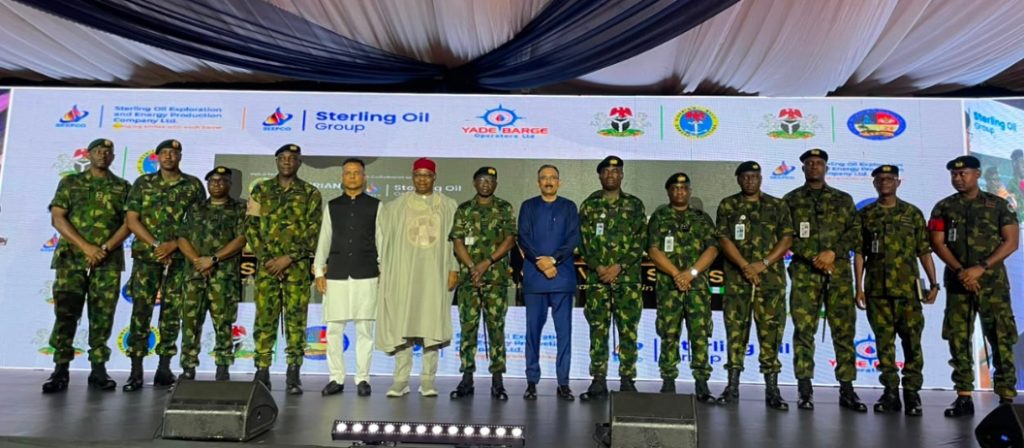
The inauguration marked the first operational vessel under a partnership between the Nigerian Navy and Sterling Oil Exploration and Energy Production Company Limited (SEEPCO), established through a Memorandum of Agreement.
Under the arrangement, SEEPCO will provide 10 private maritime logistics vessels, while the Navy will deploy personnel aboard the vessels for maritime security operations.
According to Abbas, the commissioning of KALI 3 was particularly significant because it came after the launch of Operation DELTA SENTINEL in January 2026, which has seen the Navy intensify intelligence-led surveillance, patrols, interdiction operations and inter-agency coordination against crude oil theft and associated crimes across the Niger Delta and its maritime approaches.
The CNS said the sustained operations had restricted the activities of criminal networks, improved confidence along production corridors and contributed to a more secure operating environment for legitimate oil and gas activities.
“According to current official statistics, Nigeria recorded an average crude oil and condensate production of approximately 1.735 million barrels per day in June 2026, the highest level in 74 months,” Abbas said.
He added that crude oil production alone reached 1.56 million barrels per day, representing 104 per cent of Nigeria’s OPEC quota.
The CNS attributed the improvement to the combined impact of government policy, industry investment and sustained Nigerian Navy operations, saying the Navy’s operational successes had contributed to conditions necessary for improved national revenue and renewed investor confidence.
“This positive trajectory reflects the combined impact of government policy, industry investment and sustained Nigerian Navy operations,” he said.
Abbas said the security of Nigeria’s offshore domain was critical because the area contains energy infrastructure and other strategic assets vital to the country’s economic prosperity.
He warned that any disruption to crude oil production goes beyond individual operators, as it could weaken government revenue, undermine investor confidence and constrain national development.
He described the protection of offshore assets as an essential component of Nigeria’s economic security and a prerequisite for sustainable growth of the Blue Economy.
The CNS said the SSV-KALI 3 was therefore part of a broader effort to consolidate the security gains recorded under the Navy’s operations and sustain the upward trajectory in crude oil production.
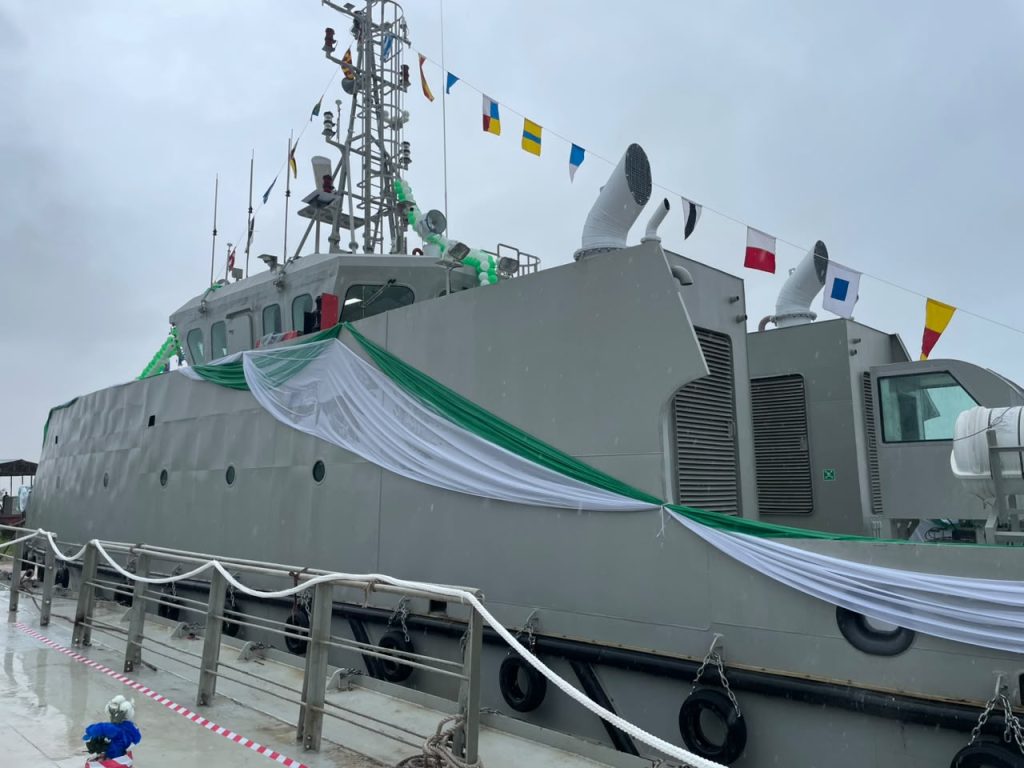
The vessel, described as a next-generation Security Patrol and Support Vessel, was designed for coastal and sea surveillance, interdiction, anti-piracy and maritime law enforcement operations.
It incorporates advanced technology and robust engineering, with emphasis on adaptability, endurance and safety, while meeting modern naval security requirements and complying with classification society standards.
Abbas commended SEEPCO for investing in maritime security and local capacity development, saying the company’s partnership with the Navy demonstrated an understanding that maritime security was a shared national responsibility requiring structured cooperation between government institutions and responsible corporate organisations.
“I encourage other operators and maritime stakeholders to draw appropriate lessons from this initiative and to invest responsibly in arrangements that strengthen collective security and protect legitimate production,” he said.
He also assured private-sector operators that the Nigerian Navy remained ready to collaborate with willing partners to deepen maritime security, protect Nigeria’s maritime interests and secure critical assets on which the national economy depends.
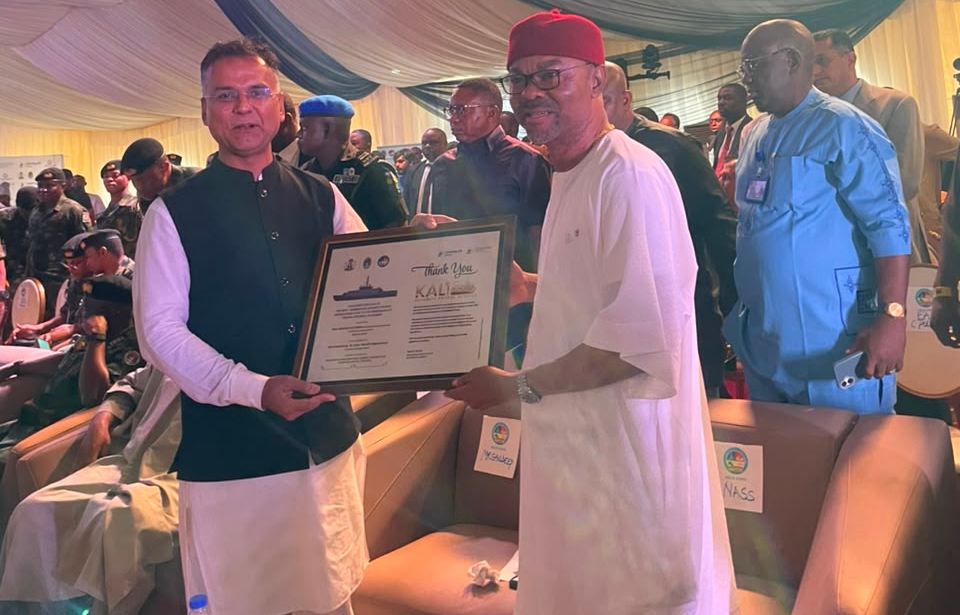
In his vote of thanks, the Vice President of SEEPCO, Mr Sandeep Singh, expressed appreciation to the Nigerian Navy and the CNS for their support, guidance, partnership and commitment to maritime security.
Singh also appreciated the Delta State Government for its initiatives and contributions towards the security of economic activities and sustainable development in the area.
He extended his gratitude to the host community for welcoming SEEPCO and providing a conducive environment for its operations.
Representing the Delta State Governor, Sheriff Oborevwori, the Deputy Governor, Sir Monday Onyeme, said the construction of the vessel in Delta State demonstrated the state’s enabling environment for businesses, as well as its human capital, technical expertise and industrial capacity to produce sophisticated assets for strategic sectors of the economy.

Onyeme said the achievement was consistent with the administration’s M.O.R.E. Agenda and its commitment to investment, enterprise and sustainable economic growth.
He said the state government would continue to support initiatives promoting local content, employment creation and the participation of local people and businesses in the state’s economy.
The Deputy Governor also said collaboration with security agencies had strengthened security across Delta State through improved coordination, intelligence sharing and rapid response.
According to him, those efforts had contributed to greater stability in communities and waterways, protecting lives and property, safeguarding critical infrastructure and creating a more secure environment for legitimate economic activities, particularly in the oil and gas sector.
“The SSV-KALI 3 will add valuable capacity to these efforts. It will strengthen maritime security, help protect oil and gas assets, and support the fight against oil theft, illegal bunkering and other maritime crimes,” Onyeme said.
He stressed that a secure operating environment was essential for investment, production and economic growth, assuring investors that Delta State remained open for business.
“A secure operating environment is essential for investment, production and economic growth. Delta State therefore remains open for business, and we will continue to work with investors, security agencies and other stakeholders to sustain the peace and security required for businesses to thrive,” he said.
Onyeme congratulated SEEPCO and the Nigerian Navy on the commissioning and urged the vessel’s operators to maintain the highest standards of professionalism, discipline and safety.
He subsequently formally inducted the SSV-KALI 3 into service.
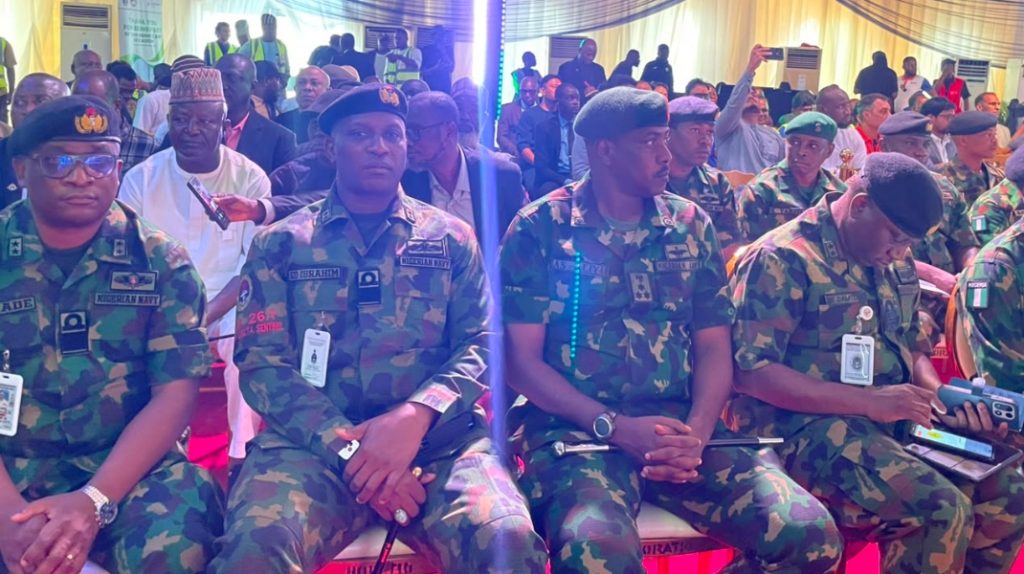
Among those present at the ceremony were the Commanding Officer, Nigerian Navy Ship (NNS) Delta, Commodore Shehu Tasiu; Member of the House of Representatives, Hon Nnamdi Ezechi; Member of the Delta State House of Assembly, Hon Prince Emeka Osamuta; and His Royal Highness, the Uwaoma of Okpai Kingdom, Prince Emeka Ugbome, among others.