
Rita Enemuru, Reporting
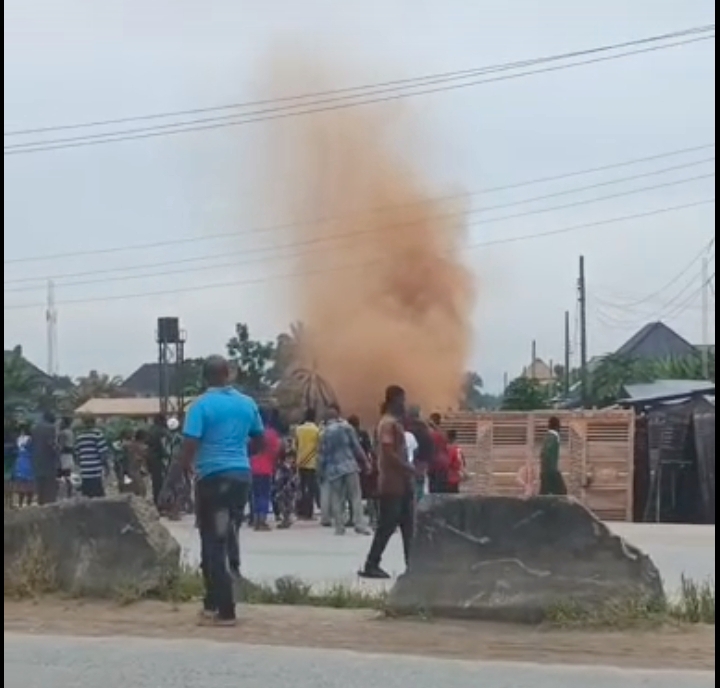
THE Minister of Works, Engr David Nweze Umahi, has directed the immediate deployment of major contractors to all three sections of the Benin-Asaba Federal Road to restore failed sections and bring an end to the suffering of motorists and other road users.
The directive comes after the concessionaire repeatedly blocked federal government efforts to intervene on the deteriorating road, citing the terms of a concession agreement entered into by the previous administration.
In a statement issued by his Senior Special Assistant on Media, Francis Nwaze, the Minister said the situation on the concessioned Benin-Asaba Road has reached a point where the overall public interest must take precedence over the existing concession agreement.
Concessionaire Blocks Government Intervention
Recall that the Minister was on the Benin-Asaba Road approximately seven days ago, where he assembled a number of contractors and directed them to prepare for immediate palliative intervention on the affected sections at no cost to the concessionaire.
However, the concession agreement requires that before the Federal Government can intervene, the permission of the concessionaire must be obtained – and that permission was not granted.
The Minister subsequently proposed three options to the concessionaire, any one of which would have enabled the Federal Government to move in and address the worsening condition of the road. Unfortunately, none of the options was accepted.
Immediately after the Minister left Asaba, the already limited equipment deployed to the road by the concessionaire was further reduced to just one, worsening the situation and increasing the suffering of motorists and other road users.
The statement said while the Minister takes responsibility for the concerns and suffering of Nigerians using the road, it is important to state that the concessionaire has also not taken the suffering of Edo people and the travelling public sufficiently into consideration by declining all the options put forward by the Federal Government.
Emergency Intervention Ordered
In view of this situation, the Minister has directed the immediate deployment of major contractors within the corridor to all three sections of the Benin-Asaba Road to restore the failed sections and bring relief to the people, with the cost of the emergency intervention being borne by the Federal Government.
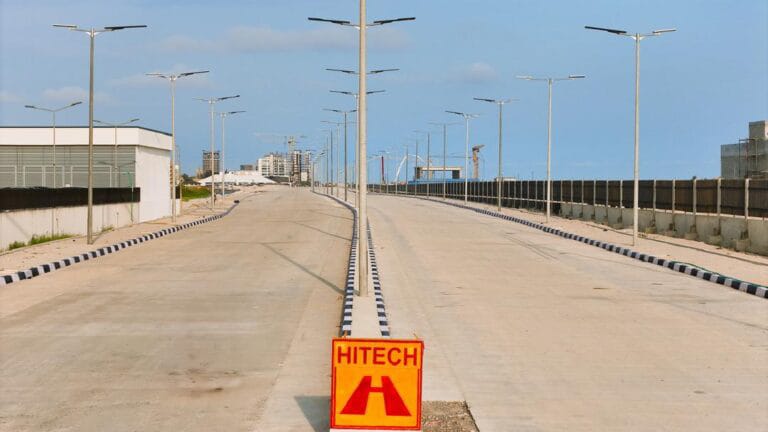
The Minister has also directed the immediate redesign of the entire route to be rebuilt with reinforced concrete pavement.
The public should therefore take note that immediate action is underway to restore every failed section of the Benin-Asaba Road and subsequently rehabilitate the entire sections using reinforced concrete pavement.
Update on Other Road Projects
The Minister also provided updates on several other major road projects across the country:
Benin-Sapele Road: The Governors of Edo and Delta States, the Niger Delta Development Commission (NDDC), and the Federal Government are currently engaged in interventions on different sections of the road to restore the entire route.
Ifaki (Ekiti) – Kabba (Kogi) Road: The Federal Government is engaging both the contractor, Gamji Nigeria Company Limited, and Dangote PLC on immediate emergency and permanent intervention on the most failed sections.
Sokoto-Zamfara-Katsina Road: This inherited project involves the dualisation of approximately 350 kilometres. Over 50 kilometres of one carriageway have been fully completed with reinforced concrete pavement. Contractors including CBC, SETRACO, Triacta and Mothercat are being remobilised to complete outstanding works.
Abuja-Kaduna-Zaria-Kano Road: The Federal Government has completed the 118-kilometre Lot 1, mostly on reinforced concrete pavement. Lot 2, covering 164 kilometres, is over 60 percent completed. Solar-powered lights are being installed along the entire route to improve night visibility and security. The project is scheduled for completion by December 2026.
Bauchi-Jigawa Road: Triacta Nigeria Limited has been mobilised to carry out necessary interventions on failed sections, with work currently ongoing.
Sagamu-Ore Road: 48 kilometres of the 96-kilometre road have already been completed using reinforced concrete pavement. Solar lights are being installed on the entire stretch.
East-West Road: Failed and critical sections, including defective bridges, are being marked out for emergency procurement and intervention.
Abuja-Lokoja Road: Several contracts are ongoing, while three critical sections without contracts are being procured for emergency intervention.
Lokoja-Benin-Warri Road: The President has directed a complete redesign and procurement of the 400-kilometre dualised route using reinforced concrete pavement.
Carter Bridge: The site has been handed over to contractor CCECC for the construction of a permanent new bridge, with work commenced.
Third Mainland Bridge: The Federal Government is at the final stage of determining the appropriate intervention for defective underwater structural elements.
Lagos-Ibadan Road: Work has commenced on the flooded section.
First and Second Niger Bridges: Intervention work is ongoing on the approach roads to the Second Niger Bridge. The First Niger Bridge has been closed to traffic to enable immediate repair works, with the contractor mobilised to site.
Government’s Unprecedented Intervention
The Minister commended President Bola Ahmed Tinubu for the massive work being undertaken on the nation’s roads since the administration assumed office in 2023.
“When the present administration came into office, there was hardly any part of the country where one could travel for an hour without encountering significant challenges on the road network,” the statement noted.
The Federal Government is currently working on over 80 percent of the inherited federal roads, representing an unprecedented level of intervention in the country’s road infrastructure.
A New Approach: Reinforced Concrete Pavement
A major part of the new approach is the use of reinforced concrete pavement, designed to significantly extend the lifespan of major roads. These roads are expected to last between 50 and 100 years.
“This means that roads being constructed under President Bola Ahmed Tinubu’s administration are being designed with future generations in mind, rather than simply providing temporary solutions to today’s problems,” the statement said.
The Minister acknowledged the concerns of Nigerians over the condition of some roads but urged the public to recognise the enormous scale of the problems inherited and the amount of work currently being undertaken.
“It is simply impossible to resolve every road challenge accumulated over many years of neglect by past administrations within three years. What is important is that the government is working, the government is responding, and the government is putting permanent solutions in place,” the statement concluded.