Rita Enemuru, Reporting
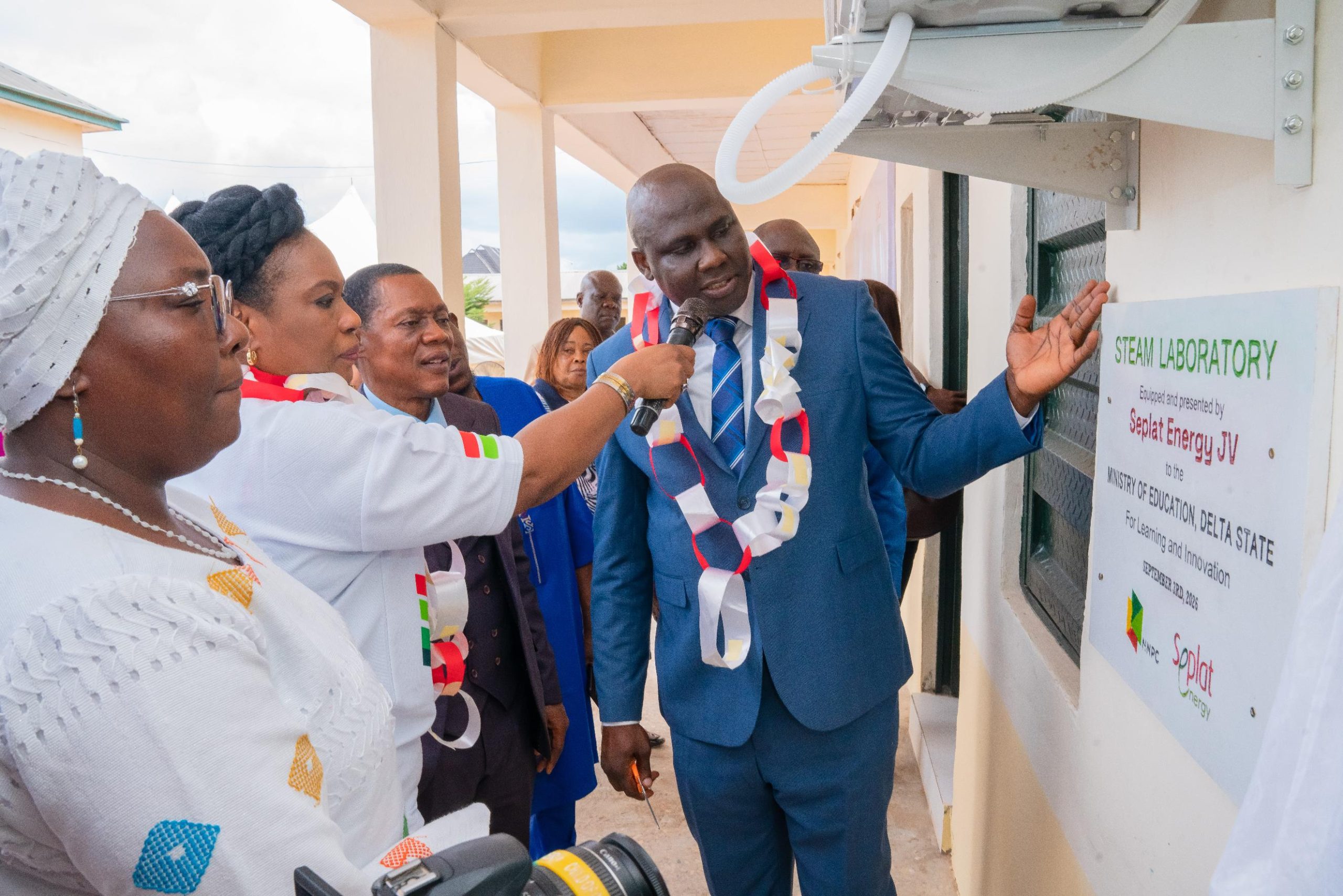
THE NNPC Exploration and Production Limited (NEPL)/Seplat Energy Joint Venture has commissioned two state-of-the-art Science, Technology, Engineering, Arts and Mathematics (STEAM) laboratories in Asaba, the Delta State capital, while training an additional 500 teachers across the state in contemporary STEAM-based teaching methods.
The two fully equipped laboratories, situated at Asagba Mixed Secondary School and Zappa Basic Secondary School, were formally handed over to the Delta State Government as part of the Joint Venture’s sustained investment in education and human capital development.
Speaking at the commissioning ceremony in Asaba, the Director of External Affairs and Social Performance at Seplat Energy Plc, Chioma Afe, who was represented by the General Manager, Corporate Social Investment and Social Performance, Esther Icha, said the intervention was designed to strengthen practical and student-centred learning while preparing young people for the demands of a rapidly changing world.
Afe said the facilities represented more than the provision of equipment, describing them as strategic investments in the future of students, schools and the state.
She said: “Through these laboratories, our students will not only learn theories; they will experiment, design, create, test ideas and build real confidence to solve real-life problems.”
According to her, STEAM education has become central to innovation, creativity, critical thinking, problem-solving and sustainable development.
“STEAM, which stands for Science, Technology, Engineering, Arts and Mathematics, is no longer an option in today’s world; it is the foundation for innovation, problem-solving, creativity and sustainable development,” she said.
Afe disclosed that the latest intervention had increased the number of STEAM laboratories established by the NEPL/Seplat JV in Delta State to seven.
She expressed appreciation to the Delta State Government, the Joint Venture partners, school authorities and other stakeholders for their support towards the successful implementation of the initiative.
Representing Governor Sheriff Oborevwori at the event, the Commissioner for Secondary Education, Dr Kingsley Ashibuogwu, commended Seplat Energy and its JV partner for their sustained investment in education and other areas of development in the state.
Ashibuogwu urged the students to make effective use of the facilities and approach learning with confidence, stressing that failure should not discourage them from pursuing innovation.
He noted that many renowned inventors had failed several times before achieving success.
The commissioner also disclosed that security arrangements had been put in place to safeguard the laboratories and their equipment, including the installation of CCTV cameras and linkages with relevant security agencies.
Also speaking, the member representing Oshimili South Constituency in the Delta State House of Assembly, Hon. Bridget Anyafulu, commended Seplat Energy for extending its educational interventions to schools in the constituency.
Anyafulu highlighted the NEPL/Seplat JV’s PEARLs Quiz, among other initiatives, noting that the programme had continued to promote academic excellence among public-school students.
She said the STEAM laboratories would further promote practical learning and contribute to improved educational outcomes in public schools.
The lawmaker stressed that meaningful development required strong private-sector participation, describing investment in education as a long-term investment in peace, prosperity and sustainable development.
At Asagba Secondary School, the principal, Stella Ajufo, expressed appreciation to the Delta State Government and Seplat Energy for selecting the school as a beneficiary.
Ajufo pledged that the facility would be properly utilised, protected and maintained for the benefit of students.
She disclosed that seven teachers from the school had participated in the Joint Venture’s STEP workshop, where they were trained in contemporary teaching methods.