
Blessing Bello, Reporting
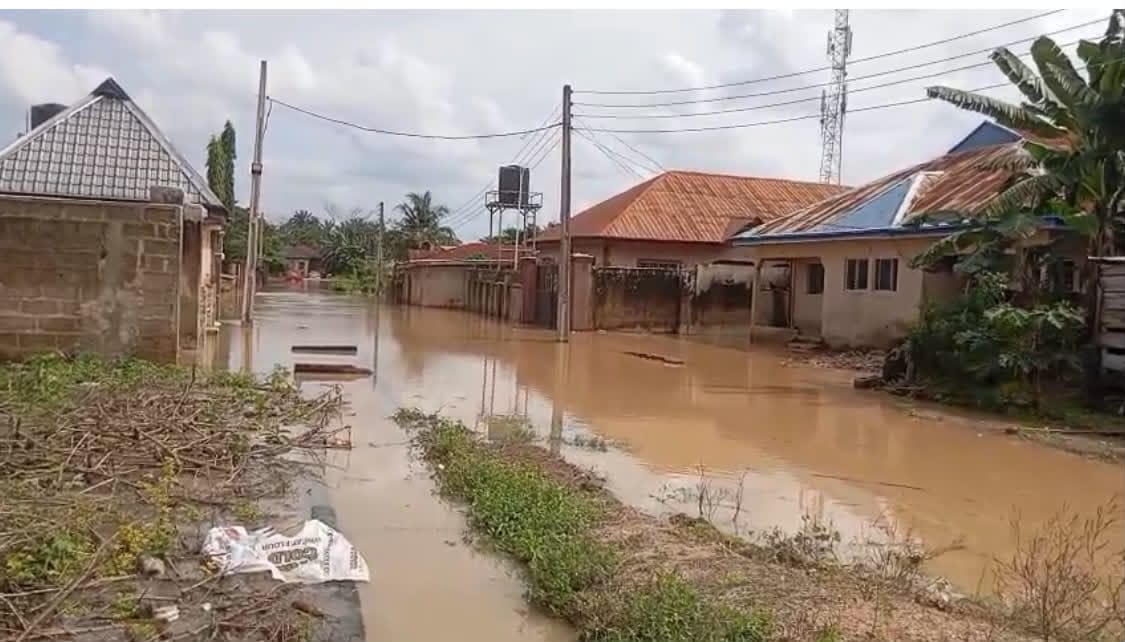
RESIDENTS in several communities across Osun State have been forced to flee their homes as flooding ravaged residential areas, leaving properties submerged and disrupting daily activities.
The affected areas include parts of Osogbo, the Osun State capital — including Ijetu, Oke-Ayepe, Aregbe/Abija, Baruwa, Omigade in Ogo-Oluwa and Koledowo along the Ilesa Garage axis — as well as some parts of Ilesa, where residents have been confronted with rising floodwaters and difficult movement.
In the Ijetu area, several residents have reportedly been displaced after floodwaters entered homes, destroying household belongings and leaving some families with limited access to shelter and other basic necessities.
The situation has also become a concern around the access road beside FirstBank in the Aregbe/Abija area, where floodwater has taken over the road and left residents and other road users stranded.
One of the victims, who is a Tribune correspondent, Dr Adeolu Adeyemo, explained that after leaving for work on Tuesday morning, he returned to find his residence in Zone 10, located behind the Capital area in Osogbo, completely submerged.
According to Adeyemo, about 200 residents have been displaced by the flood within the area.
“People had to run for their lives, leaving behind all their valuables,” Adeyemo said.
Dr Bisi Oluwadamilare, Chairman of the Zone 10 Oke-Arungbo community, noted that the last time the area experienced flooding of this magnitude was in 2019.
He added that neighbouring Zones 11 and 12 were also severely hit, appealing to emergency relief agencies to intervene immediately to help cushion the community’s heavy losses.
Reacting, the Commissioner for Environment and Sanitation, Mayowa Adejoorin, described the flood incident as self-inflicted, citing indiscriminate dumping of refuse across waterways.
He said, “We moved around and observed that, in specific cases, this flooding is often self-inflicted, like indiscriminate dumping of refuse across waterways.
“We charged the town planning office to do their work; we identified some structures at the riverbank like shops and kiosks, and even houses, that affected the free flow of water, including line drainages that are blocked in the presence of the house owners. They are blocked, so all these contributed to the flooding.”